Read the character
Identify silhouette, facial features, proportions, costume, palette, props, and art style.
One Character Studio
Requires Codex — the Skill calls the host model’s built-in image generation; a text-only agent can complete the character lock, prompts and review records but cannot produce the artwork. One Character Studio turns a single reference image into a character system that keeps producing: lock the identity first, then extend into turnarounds, expressions, poses, and a hero portrait — delivered together with prompts, review records, and character rules.
Host requirement: the Skill drives the image model built into the Codex host and needs no separate API key. In a host without image generation, the same workflow still produces the character lock, per-asset prompts and review records — but the artwork can only be created in Codex.
01 / One-minute overview
It turns “one nice but isolated character image” into character assets that keep working across angles, expressions, and poses — assets that can be reviewed, archived, and handed off.
Identify silhouette, facial features, proportions, costume, palette, props, and art style.
Separate what must stay fixed, what may vary, what can be reasonably inferred, and what must never drift.
Generate turnaround, expressions, poses, and hero portrait in sequence — never mixing objectives.
When face swaps, costume changes, or left-right flips appear, repair only the failed item.
Ship images, prompts, the character lock, and quality records in one pack.
Not chasing one lucky stunning image, but building a lightweight, reusable, transferable production standard for creators who need the same character to appear again and again.
It does not replace 3D modeling, animation rigging, or legal clearance. It delivers extensible 2D character reference assets plus production records.
02 / Before & After
What really slows a project down is not whether images can be generated — it is the character changing faces with every angle, losing details with every pose, and every hard-won lesson staying buried in chat history, so the next attempt starts from zero again.
03 / What changes
Every asset is reviewed on four dimensions: silhouette, facial features, costume, and style & palette. An asset only enters the final folder at 7/8 or above with no hard failures.
Note: 8/8 is the score recorded by the Skill’s built-in consistency rubric, not a third-party quality certification.
It is not about making AI draw a few more — it is about building production rules that let the same character keep growing.
04 / Why it works
One Character Studio fills in “character standardization” — the piece most often missing in front of general image generation — then cuts wasteful re-rolls with asset-by-asset generation and targeted repair.
Write down face shape, silhouette, proportions, costume structure, palette, and signature props first — then decide what the character does.
Every run keeps using the canonical reference image and the same character lock, so later images never drift from the original identity basis.
Turnarounds, expressions, poses, and hero portraits are handled separately, so when a problem appears you know exactly which asset drifted.
Reviewed on silhouette, features, costume, and style & palette; on hard drift, passed assets are kept and only the failed item is repaired.
05 / What you get
The default Starter pack contains both ready-to-view visual results and the identity rules, prompts, and review evidence needed for the next round of generation.
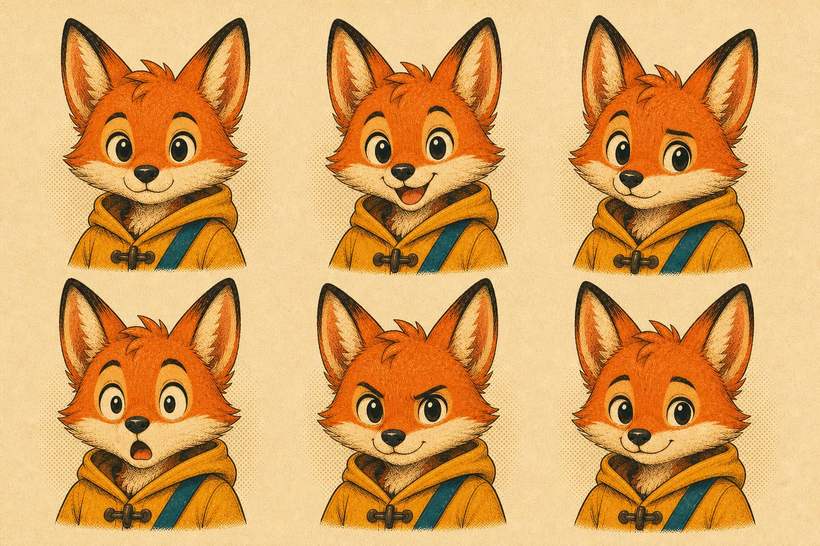
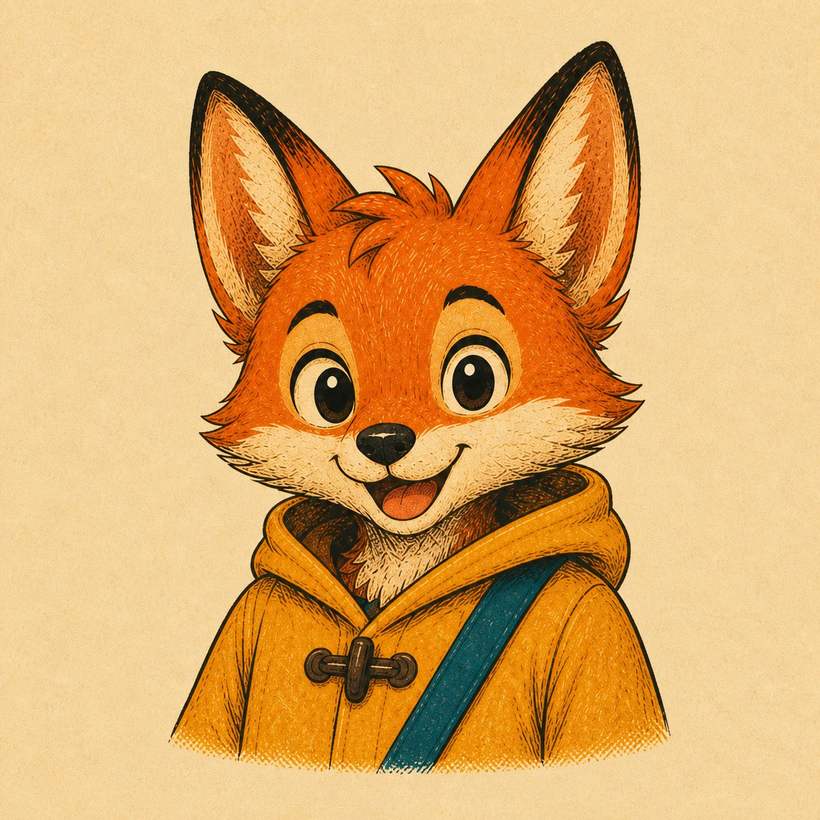
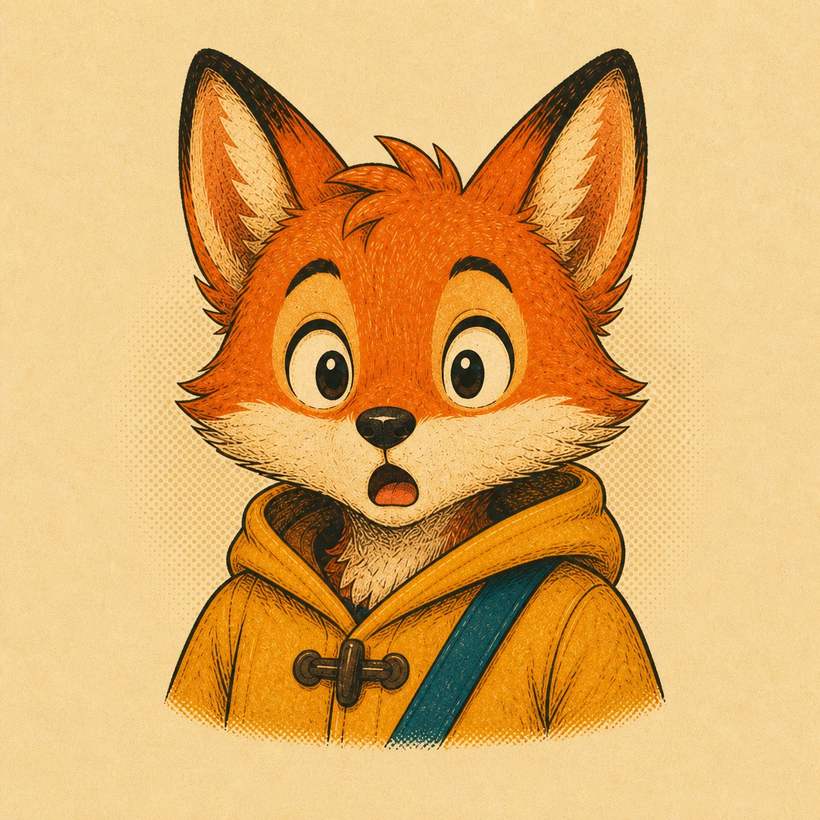
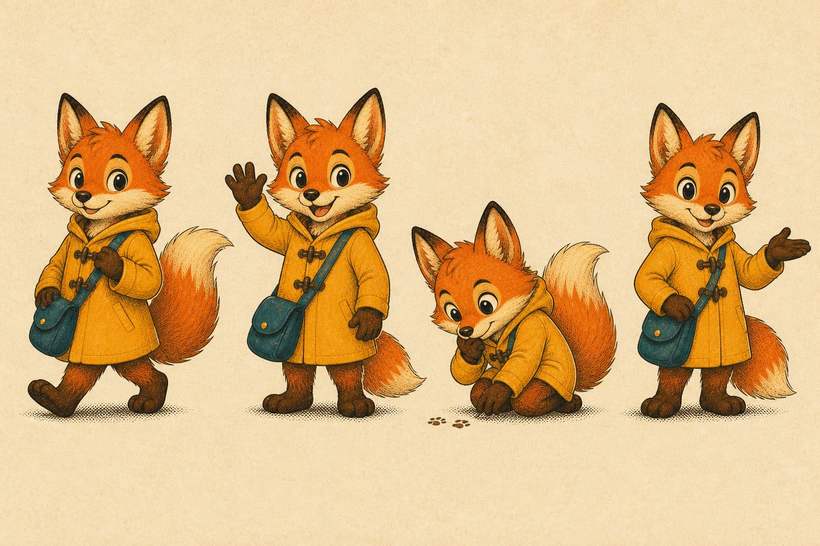
Stores the immutable identity, allowed variations, reasonable inferences, and forbidden drift.
Records the exact generation brief behind each final asset for easy reuse.
Documents the inspection results for silhouette, features, costume, and style & palette.
Consolidates final images, file paths, and structure validation results.
06 / Real outputs
All of the following are complete character assets driven by real reference images, each from a separate run.
Case 01
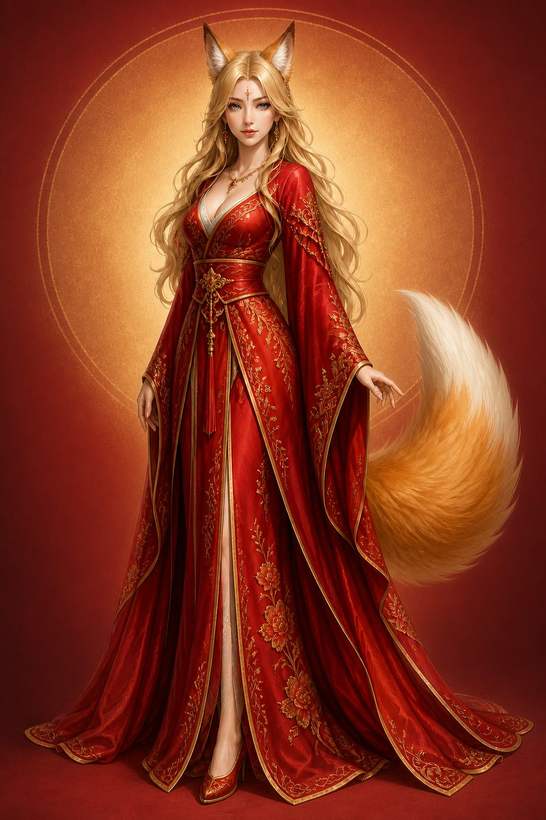
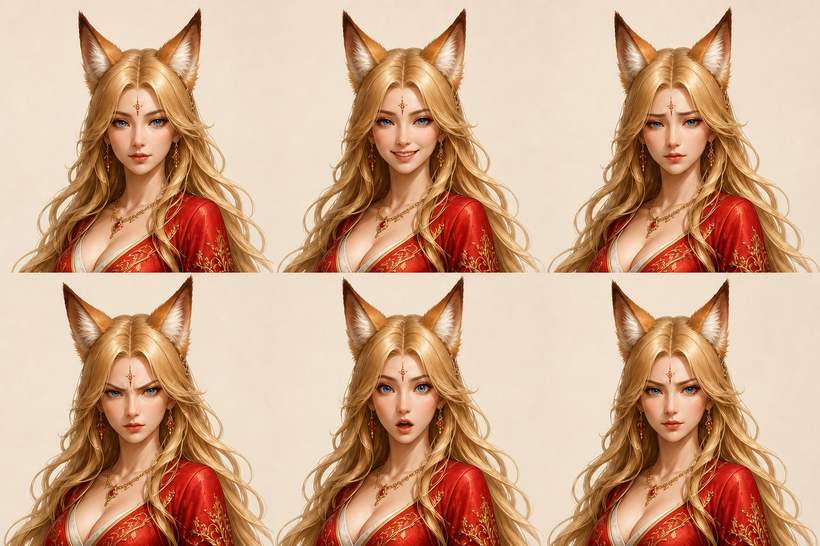
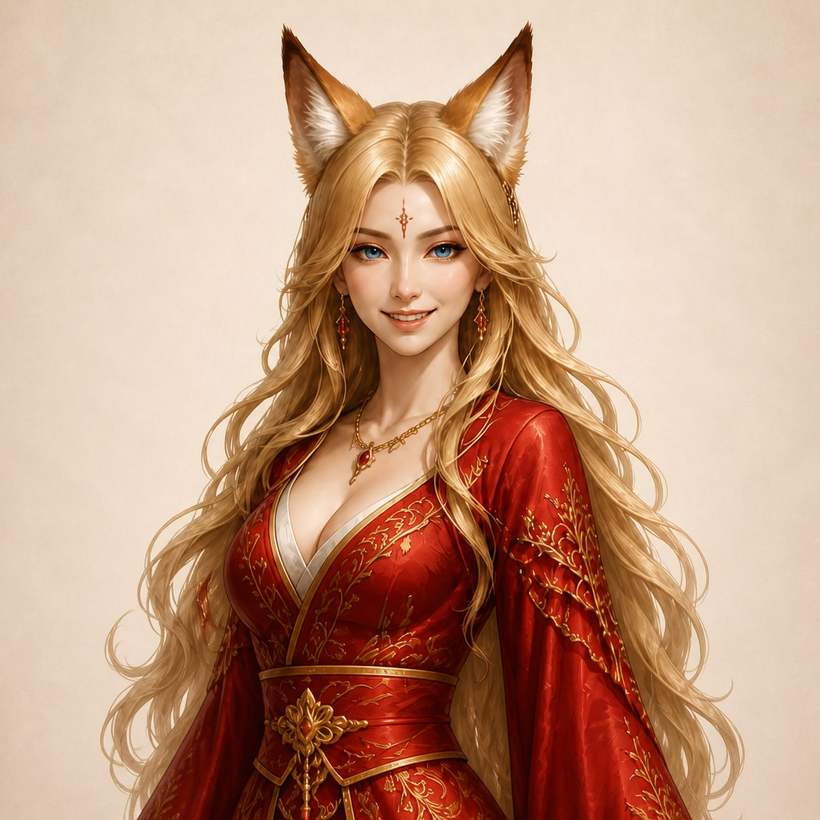
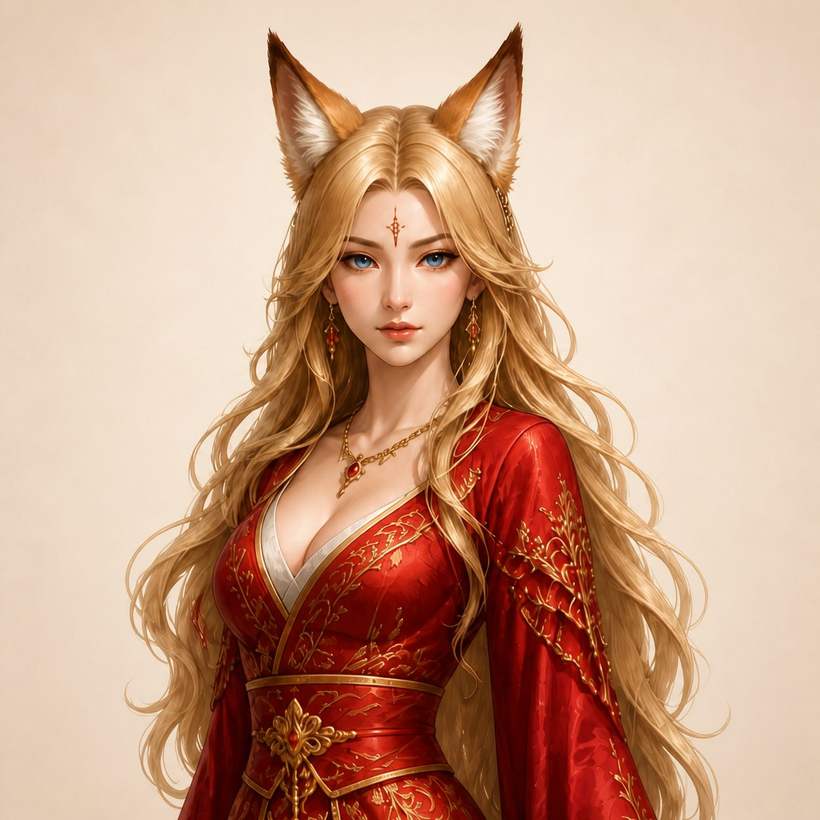
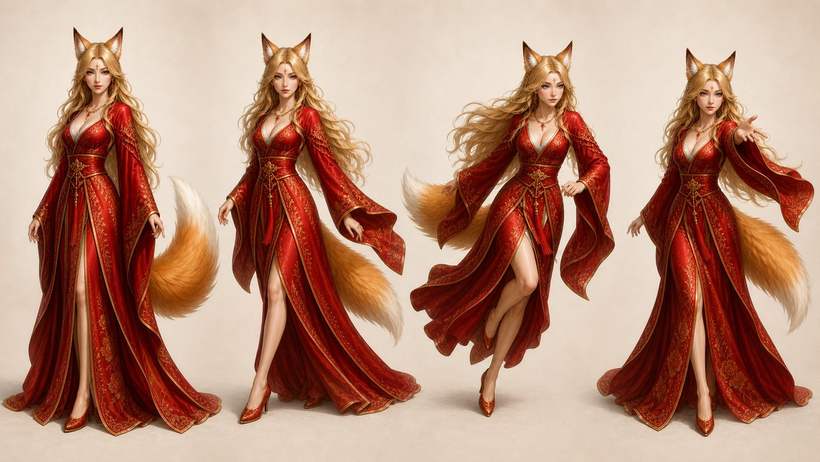
Locked: fox ears, a single fluffy tail, blonde hair, blue eyes, a forehead ornament, and a red-and-gold embroidered robe. All four delivered assets were recorded as 8/8 on the built-in rubric, with structure validation returning no errors or warnings.
Long hair & fox earsRed-gold embroiderySingle-tail constraint8/8 × 4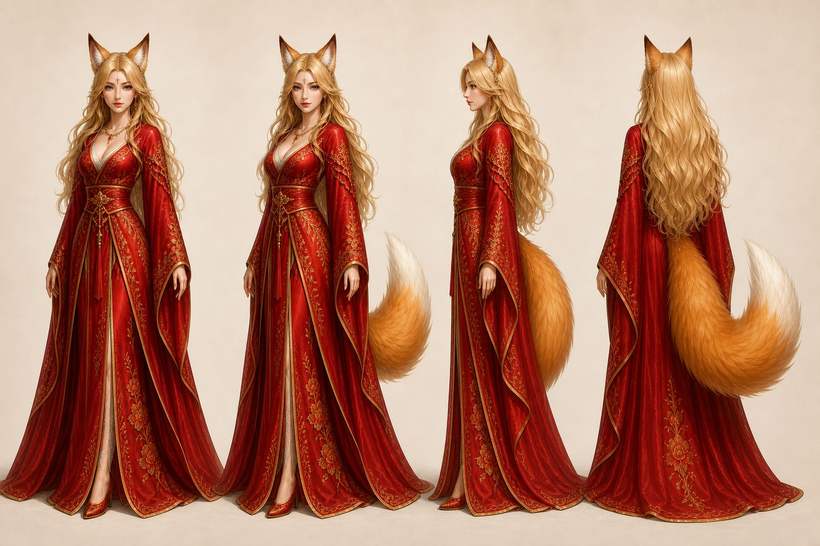
Case 02
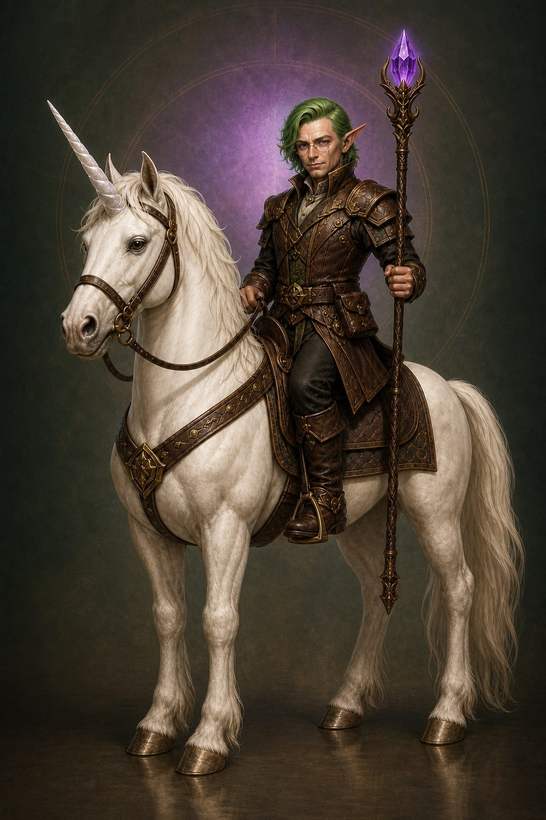
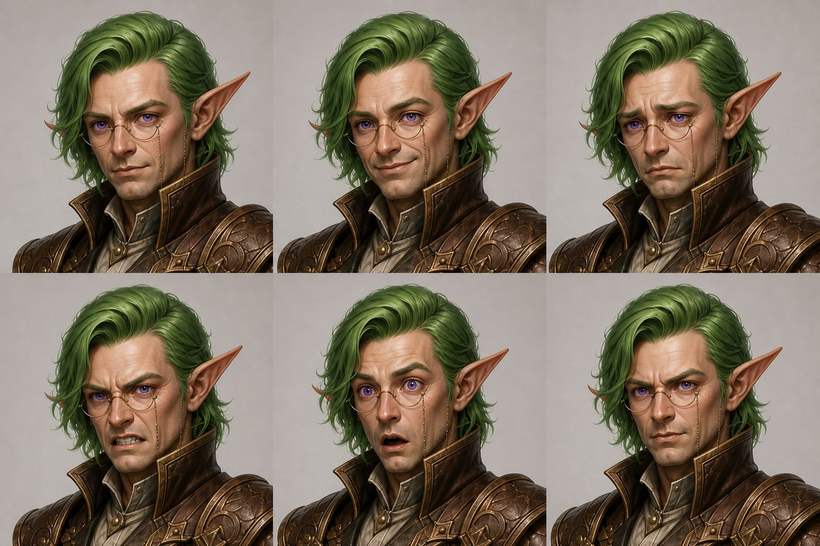
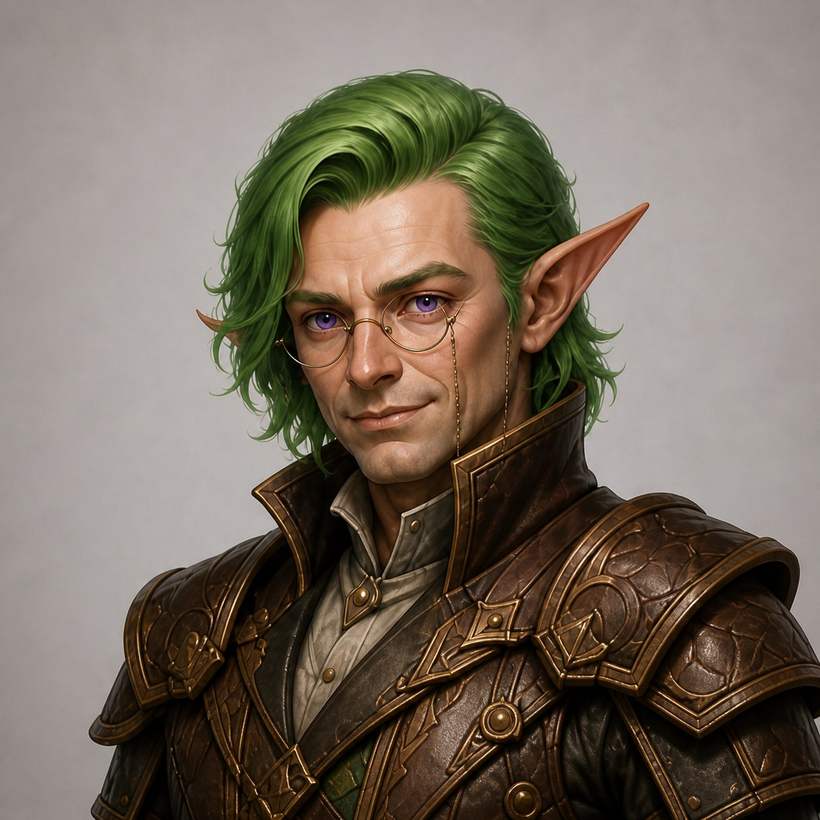
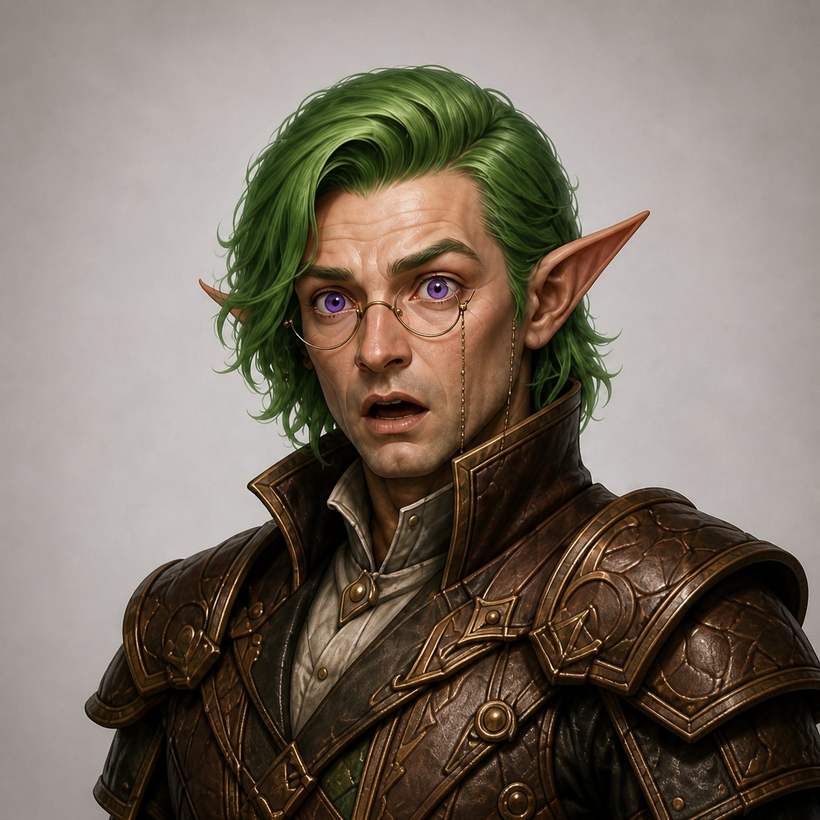
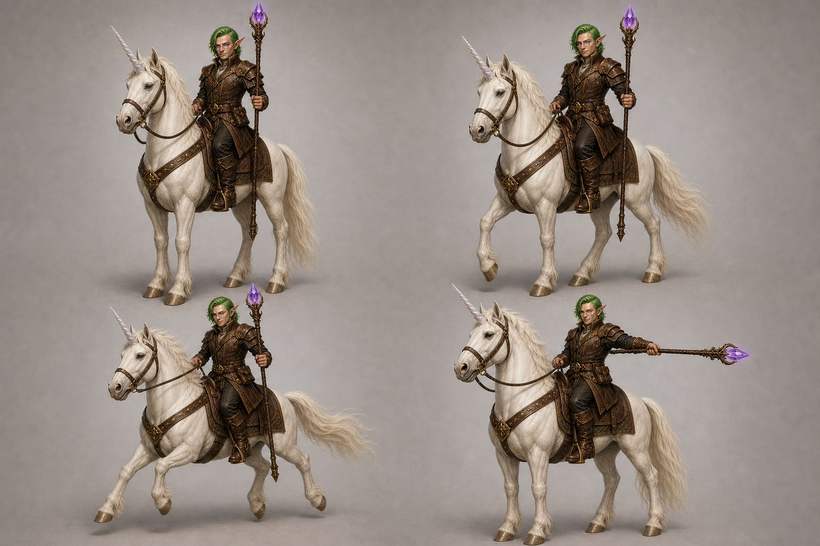
The elf’s green hair, purple eyes, glasses, bronze armor, and amethyst staff stay fixed; the ivory-white unicorn is locked as a single-horned mount. All four assets were recorded as 8/8, with structure validation returning no errors or warnings.
Dual subjectsFixed staffSingle-horned mount8/8 × 4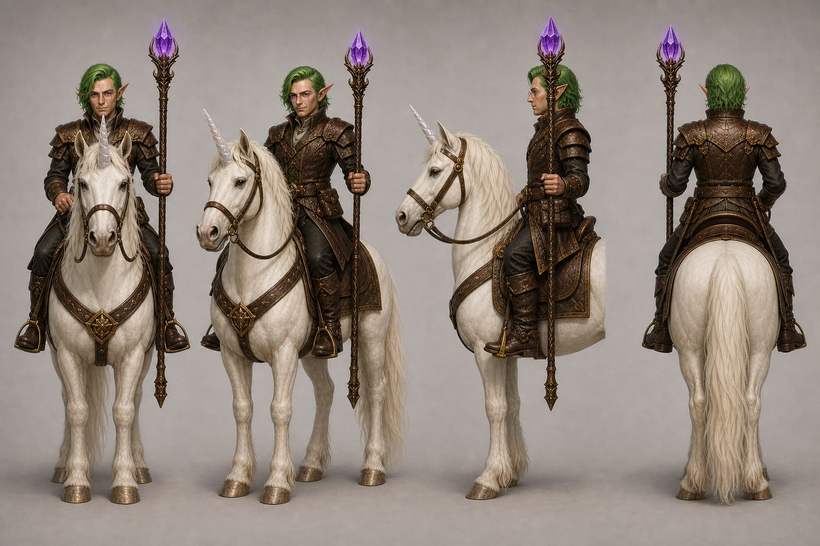
Case 03
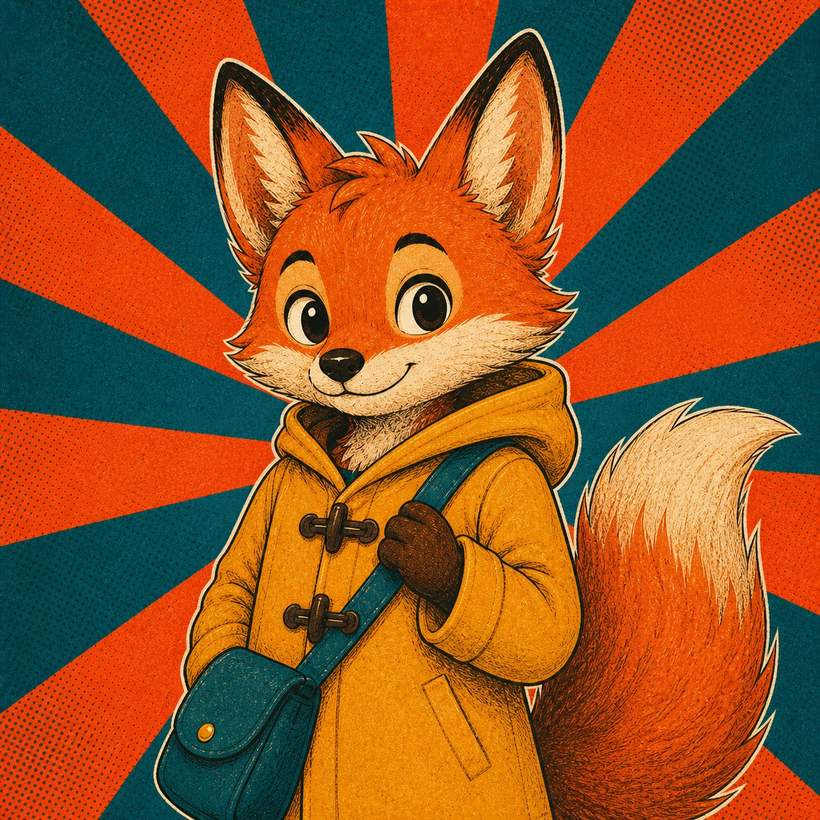
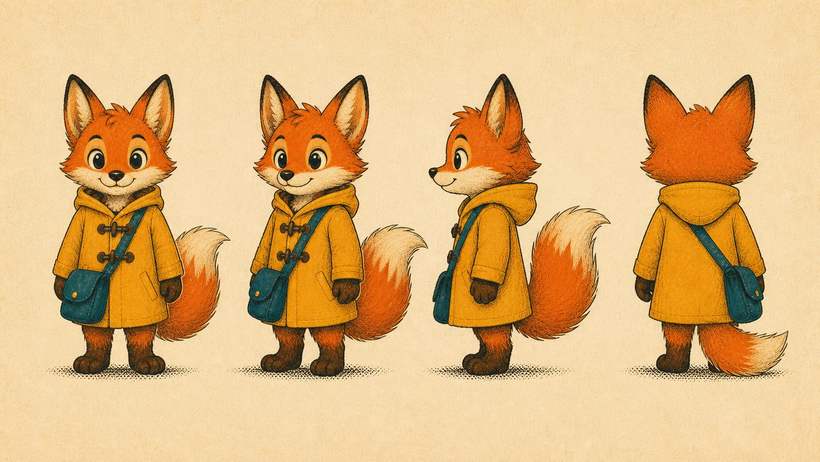
This re-run locked two pointed ears, a single large tail with a cream tip, a mustard-yellow two-toggle coat, a teal crossbody bag, and a vintage halftone texture. All four assets passed the 8/8 review, with validation returning pass.
Vintage comicHalftone textureTwo toggles8/8 × 407 / Why it matters
Built for creators and teams who need high-frequency content, multi-person collaboration, or long-term IP operations — and for anyone who needs a discussable visual baseline before formal production.
Fix the identity first, then locate the problem; when one asset drifts, you don’t have to scrap the whole set that already passed.
Images, prompts, the character lock, and review records ship together — creators, operators, and partners all see the same character rules.
One base asset set keeps extending into avatars, stickers, social content, promo art, storyboards, and game concepts.
08 / Built for
No advanced prompt-writing skills required — but you do need a reference image you have the rights to use, with a clear subject and legible details.
Quickly build a base character library for comics, novels, VTubers, or personal IPs.
Continuously produce posters, product detail pages, and social content around mascots and virtual ambassadors.
Align on a character baseline before kickoff and outsourcing, cutting the errors caused by verbal descriptions.
Extend course characters, community avatars, and event mascots into visual identities that keep updating.
09 / Start here
Prepare one clear reference image and state the purpose and asset scope you want. Leave the rest — character lock, asset-by-asset generation, consistency review, and structured packaging — to One Character Studio.