01
Collecting leads
Open papers, repositories, and community pages separately, then copy them into a personal list.
01 Hero
Set the topics. Collect papers, open-source projects, and community signals. Keep every source link.
Built for researchers, product people, and editors who need a daily view of AI developments.
arXivGitHubHacker Newsextra_items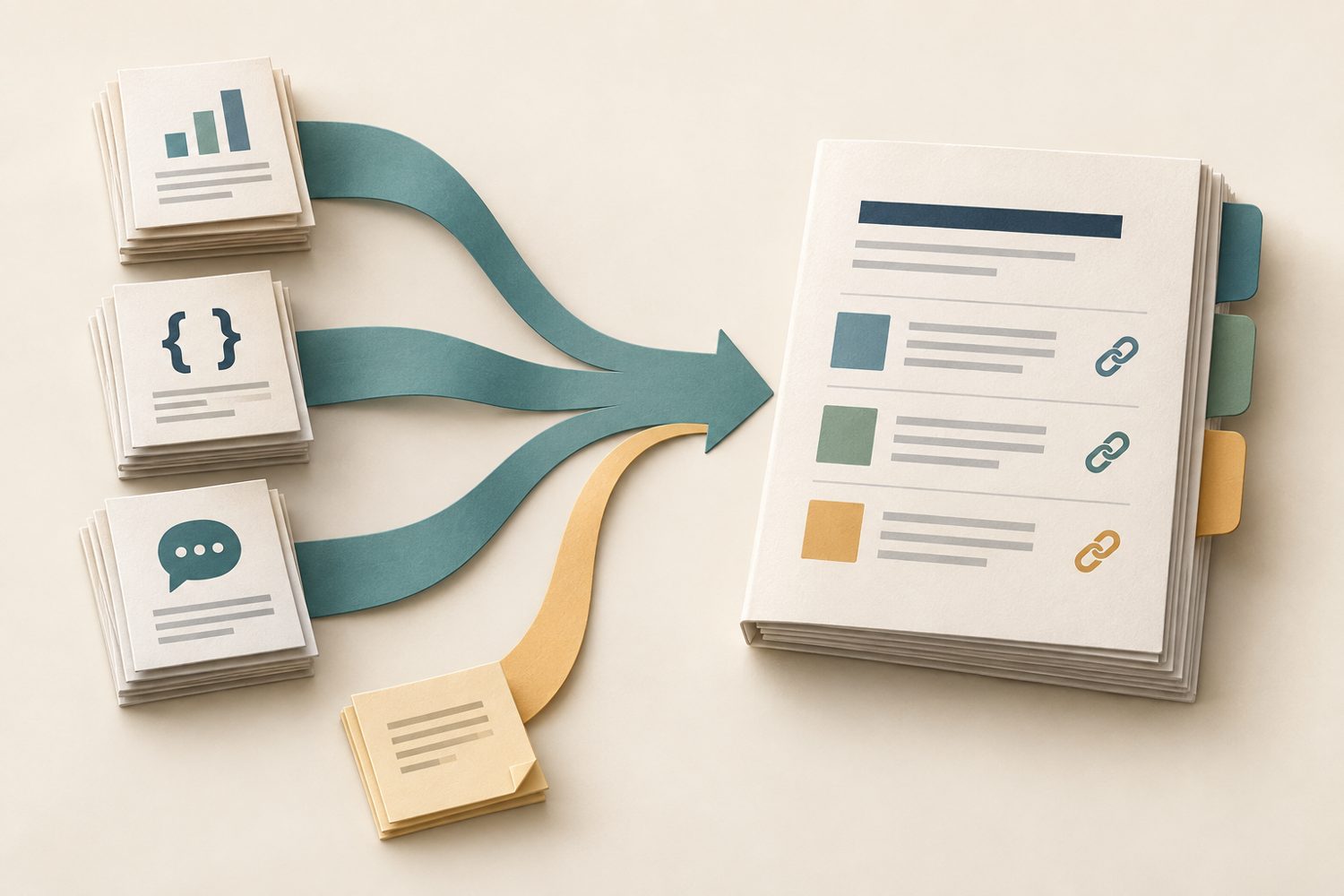
02 Before / After
The job is not to create more tabs. It is to create a candidate list that takes you back to the original source. The friction is the manual work of turning scattered leads into a readable list.
Open papers, repositories, and community pages separately, then copy them into a personal list.
The same link can appear in multiple places and must be compared manually.
When a source is missing, it is difficult to know why.
05 Solution
Set the themes and time window. Add the links already found. The Skill fetches available sources, merges, deduplicates, ranks, and returns items with source status.
X, Xiaohongshu, and Google are supplied by the calling Agent through extra_items; the Skill does not fetch them directly.

06 Standard use case
Set topics such as AI, LLM, and machine learning for the past 24 hours. The Skill gathers papers, open-source projects, and community activity into a linked candidate reading list.
We ran the English standard prompt live: past 24 hours, up to five items per source, with no extra_items supplied. The run returned 10 candidate entries: 5 from GitHub and 5 from Hacker News.
This turns scattered sources into one traceable starting point, from which research, product, or editorial teams can decide what deserves follow-up.
Note: candidate lists can include irrelevant items. Editorial review remains necessary.
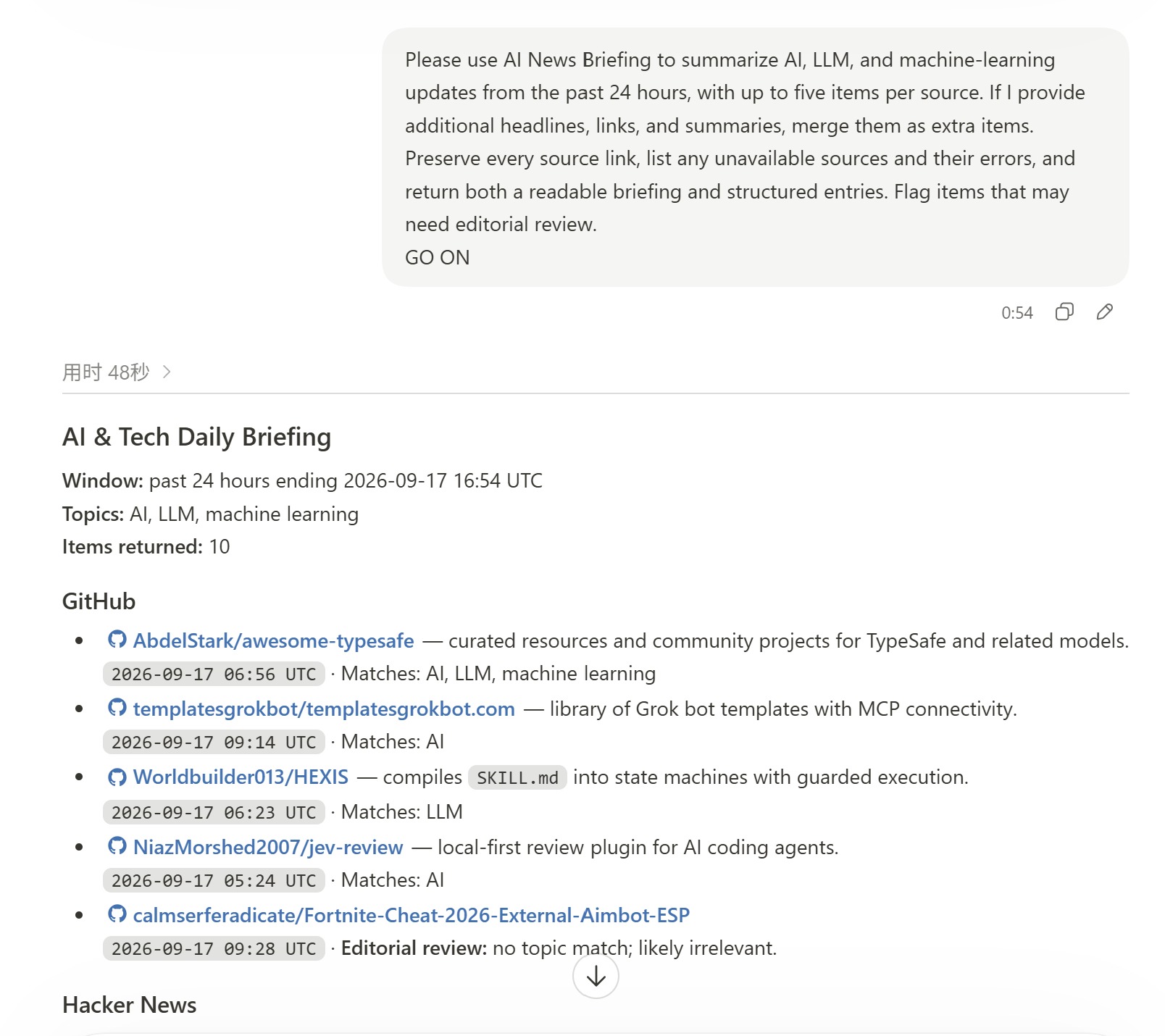
Live-run evidence
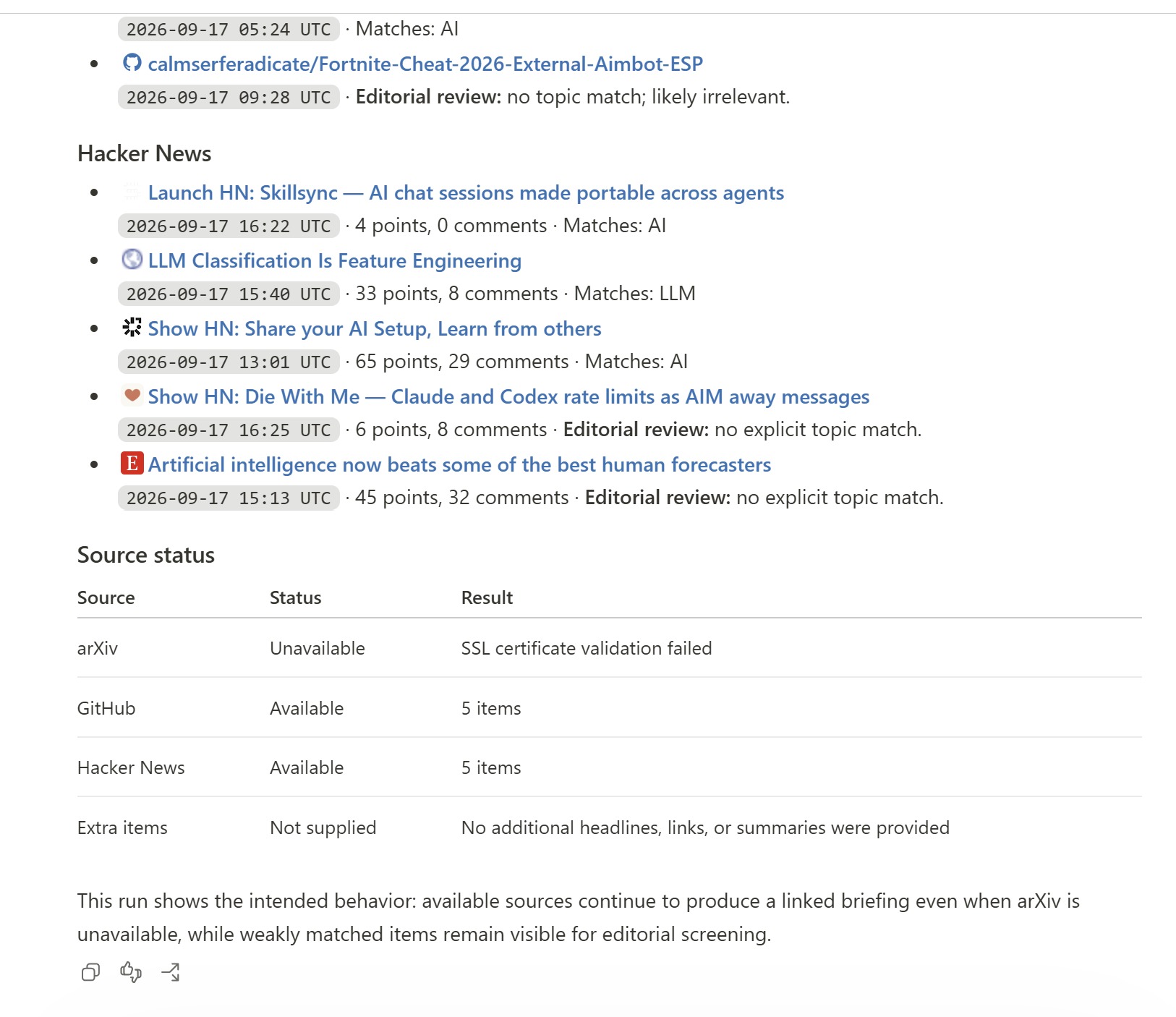
This second screenshot preserves the remaining entries and source status from the English test, showing that one failed source does not stop available sources.
Stability
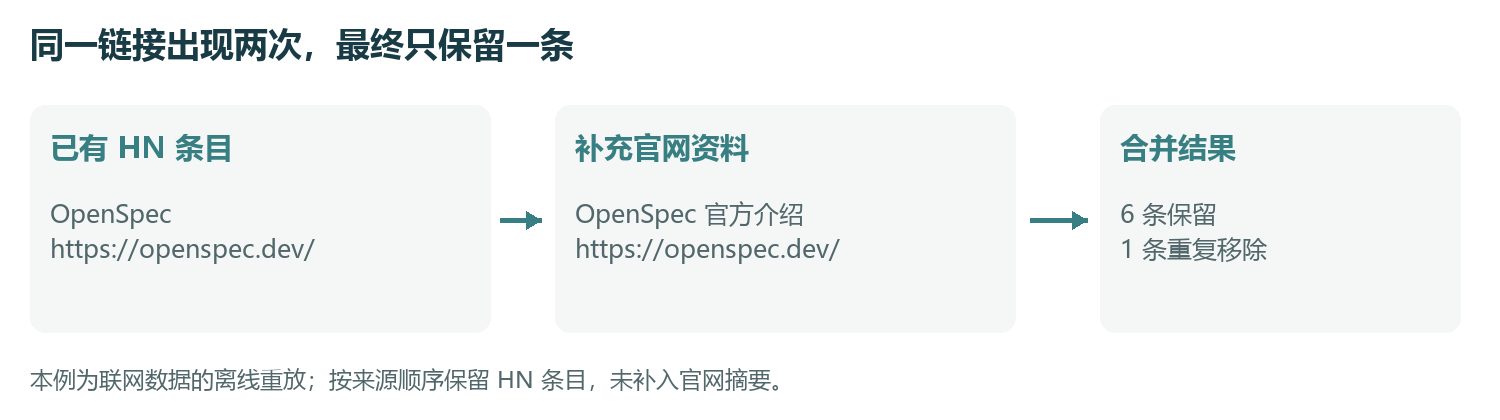
When the same link comes from multiple sources, the Skill deduplicates it through normalized URLs or similar titles, reducing manual comparison.
Deduplication uses normalized URLs or similar titles. Source order affects the retained item, and the Skill does not fuse multiple summaries into a new claim.
Verifiability
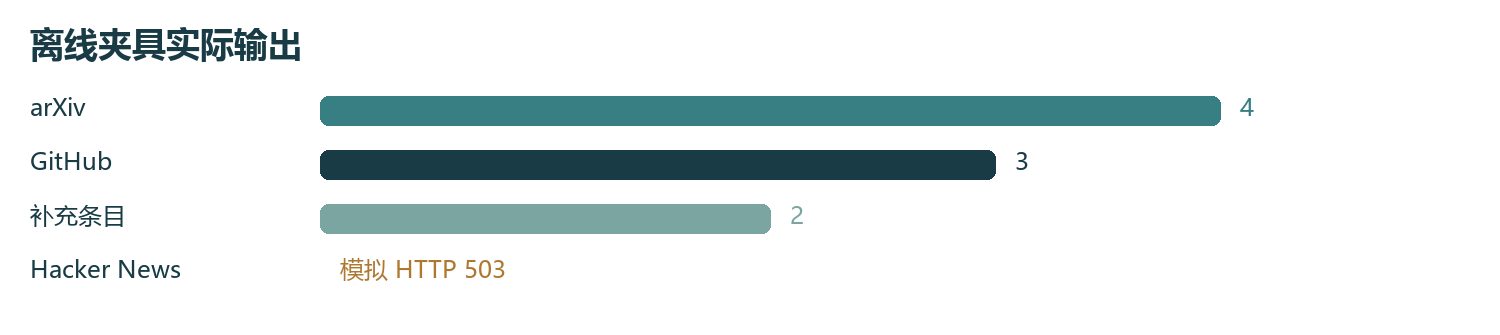
The supplied fixture covers duplicates, empty summaries, and simulated source failures, so the processing rules can be checked repeatedly.
For stable reproduction, pin now or supply a fixture with a valid reference time. Network-source failures degrade to unavailable status; invalid inputs still return structured errors.
Test data, not current-news evidence.
07 / 08
The Skill does not decide whether a paper is reliable, a project is mature, or a discussion deserves attention. It gathers the inputs for that judgment into a linked list.
“Each retained item carries a source link, and an unavailable source remains visible in the result.”
09 Start
Give an Agent with this Skill the topics, time window, per-source limit, and any links you already found.
Official Skill detail page to be added
“Use AI News Briefing for the past 24 hours of AI, LLM, and machine-learning activity. Keep up to five items per source. Merge my supplied titles, links, and summaries; preserve source links; list unavailable sources; return a readable digest and structured items.”