Make every resume line survive follow-up questions.
Pre-interview warmupGrounded in your workLayered follow-upsPractice without uploading
High DemandGraduates and job seekers need repeated, realistic interview practice before high-stakes rounds.
AccessibleAI-assisted interview tools are shaping user expectations around low-cost practice.
RepeatableCandidates need to rehearse the same resume against different roles, companies, and interview styles.
CompliantCareer centers, bootcamps, and coaching programs need clear pre-interview tools, not live interview aids.
Question banks are everywhere. Candidates still freeze when asked to “tell me more.”
Interview guides, question banks, STAR templates, and general-purpose models already exist. Real interviews are harder because the follow-ups keep drilling into your own resume.
A polished resume is not a spoken answer
A two-line project can become a dozen follow-ups: what you owned, why you chose that approach, where the metric came from, and whether the result can be verified.
Scripted answers break under pressure
Candidates memorize nice answers, then struggle when the interviewer rephrases the question, asks for details, or follows the thread one layer deeper.
Human mock interviews are not always available
Friends may not know the role. Coaches require scheduling and cost more. The market needs a middle layer between solo question drills and live mock interviews.
Stop drilling random questions. Put the resume under pressure.
When question generation becomes basic infrastructure, the real edge comes from personalization, continuity, and factual constraints.
Traditional prep: many questions, weak personal fit
Question banks answer “what does this role usually ask?” General models still require users to design prompts, rounds, interviewer roles, and factual boundaries.
Interview Simulator: questions grow from my resume
Projects, responsibilities, skills, and job requirements directly shape the questions. The system also explains the assessed ability, why the question matters, and how to answer.
No live interview assist. Just pressure testing before the real round.
Versus question banksFits the candidate’s own projects and responsibilities, not just generic role questions.
Versus general LLMsFixed workflow, steadier output, and no need to write complex prompts.
Versus mock interviewsNo scheduling required; repeat practice on the same resume at low cost.
Versus upload-first toolsCan practice around local resume text, reducing exposure of sensitive career data.
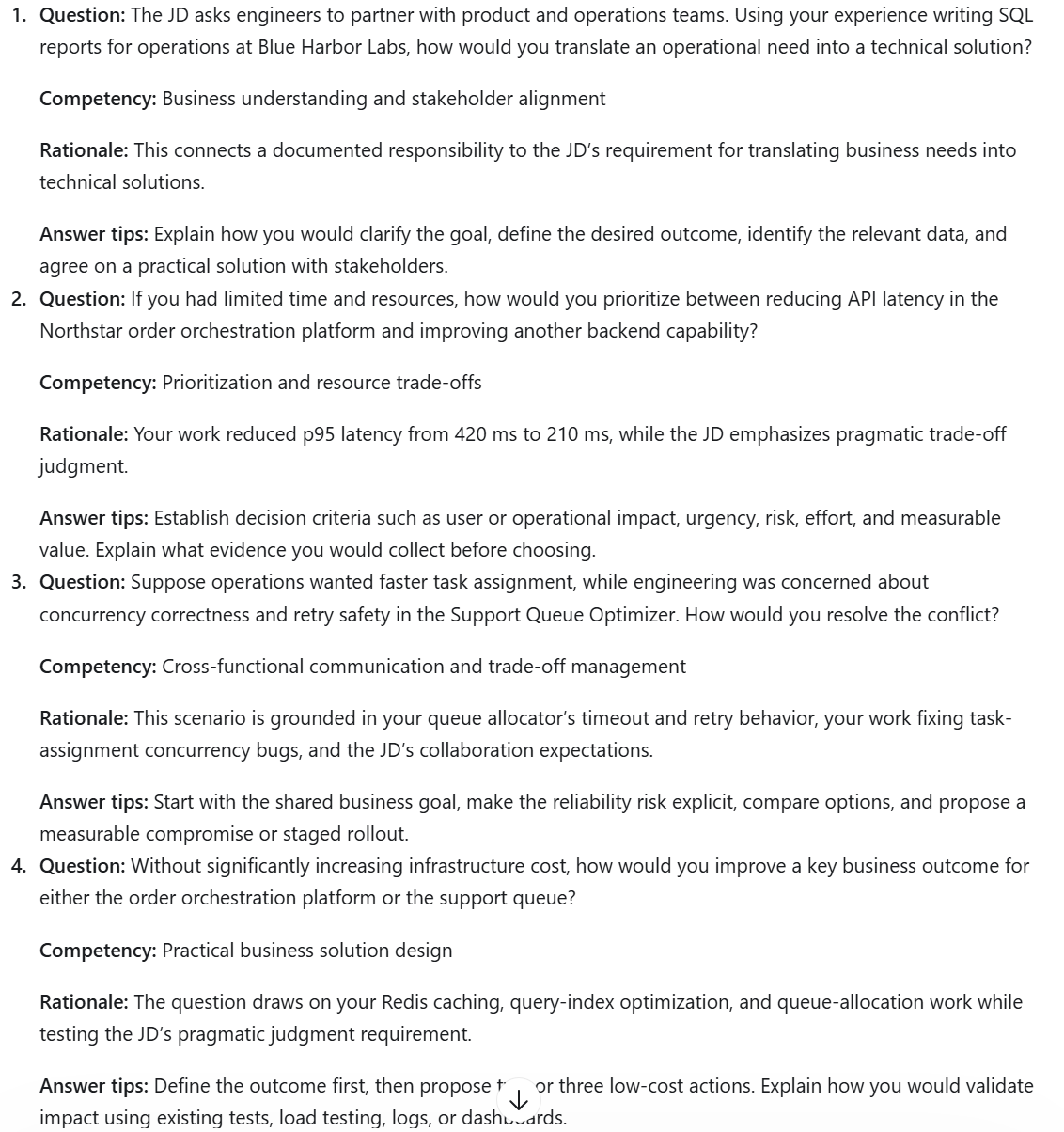
One resume, five interviewer lenses.
ROUND 01
Question Lens · HR
Motivation and fit: why are you here, and why are you a match?
Question Lens · ability coding
Technical depth: did you really build it and understand it?
Question Lens · ability project
Project deep dive: do your decisions and results hold up?
Question Lens · Business
Business judgment: what value did your solution create?
Question Lens · CEO
Leadership and collaboration: can you get things done?
Turn polished resume claims into answers that hold up under follow-up.
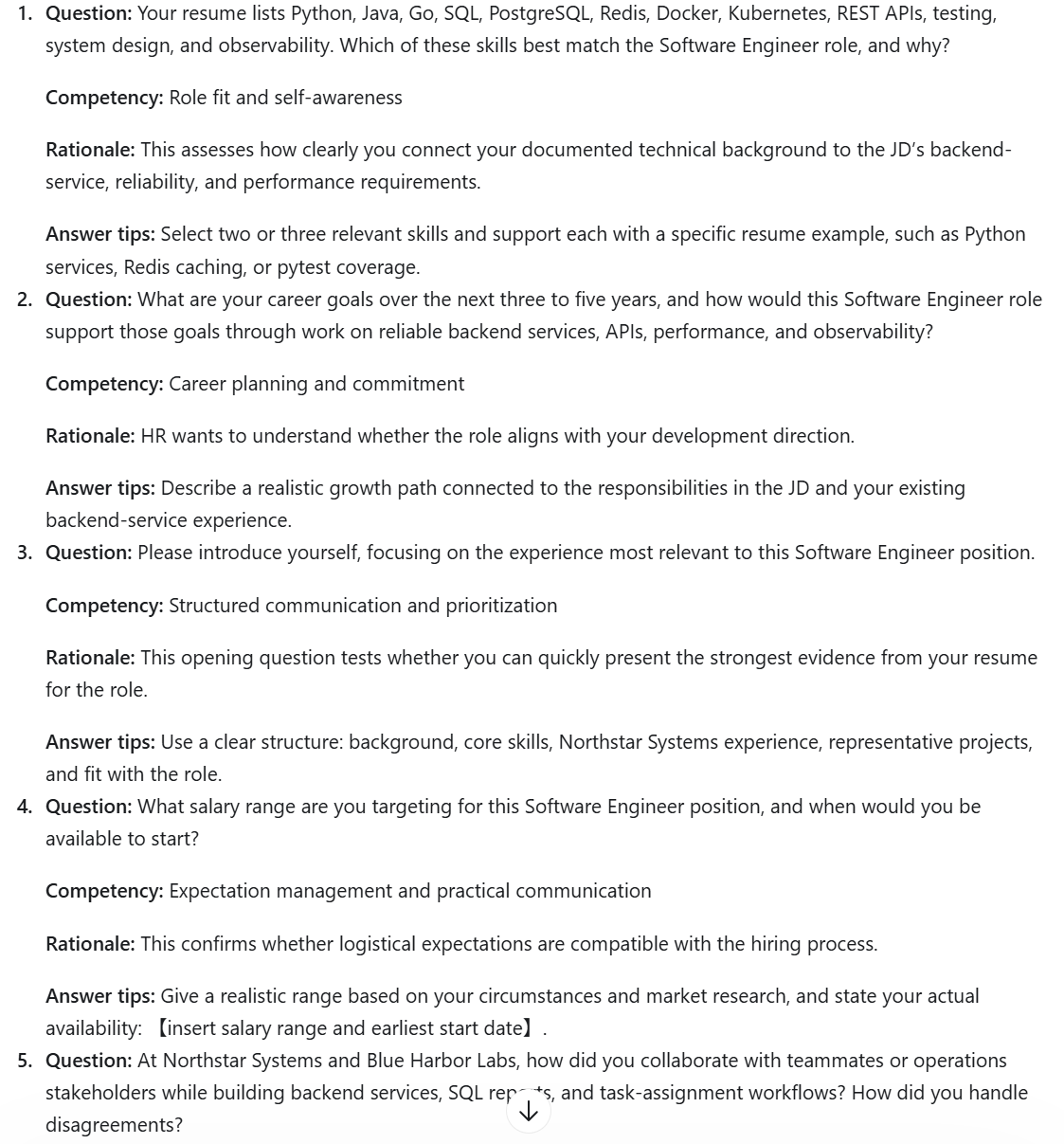
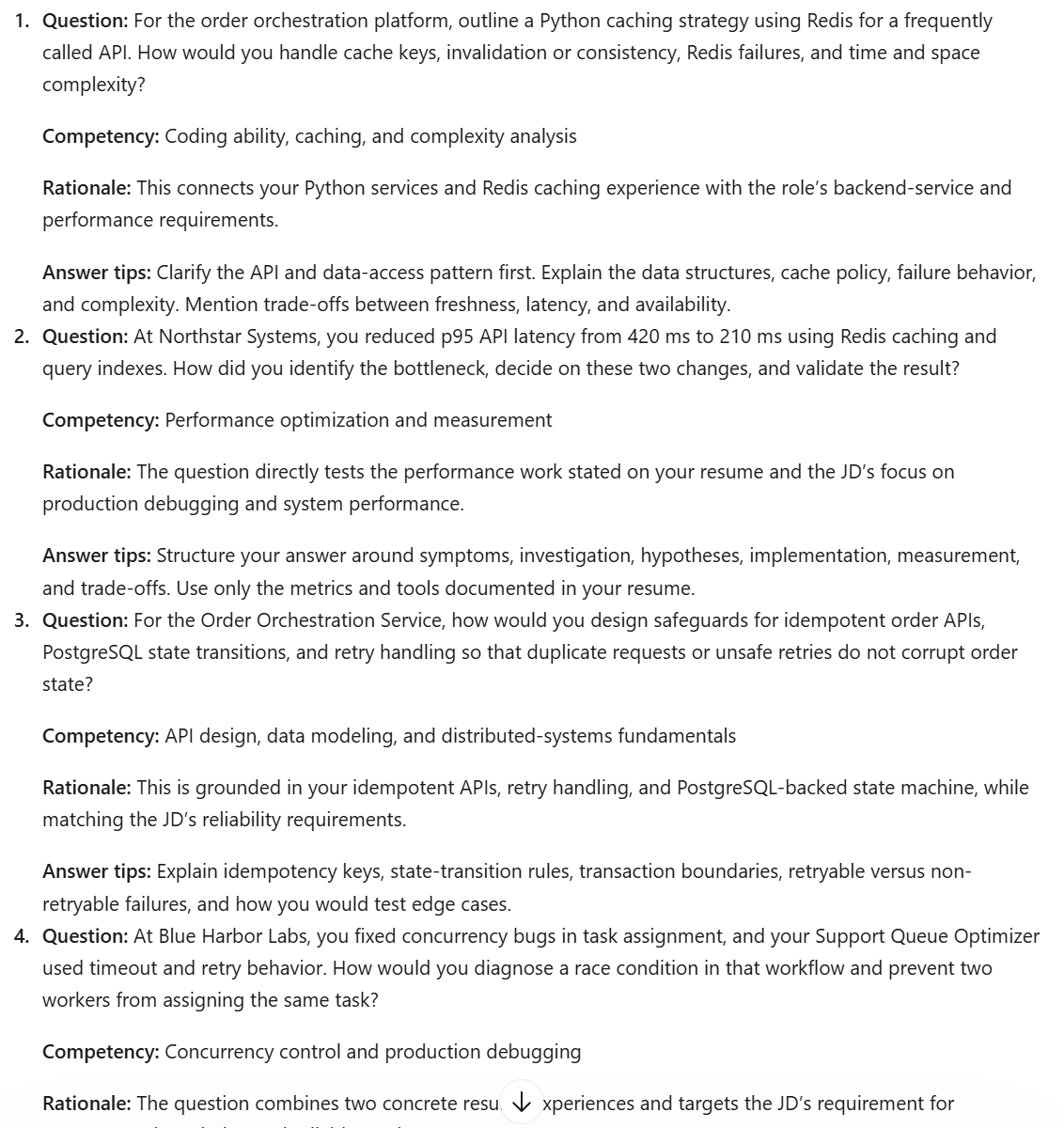
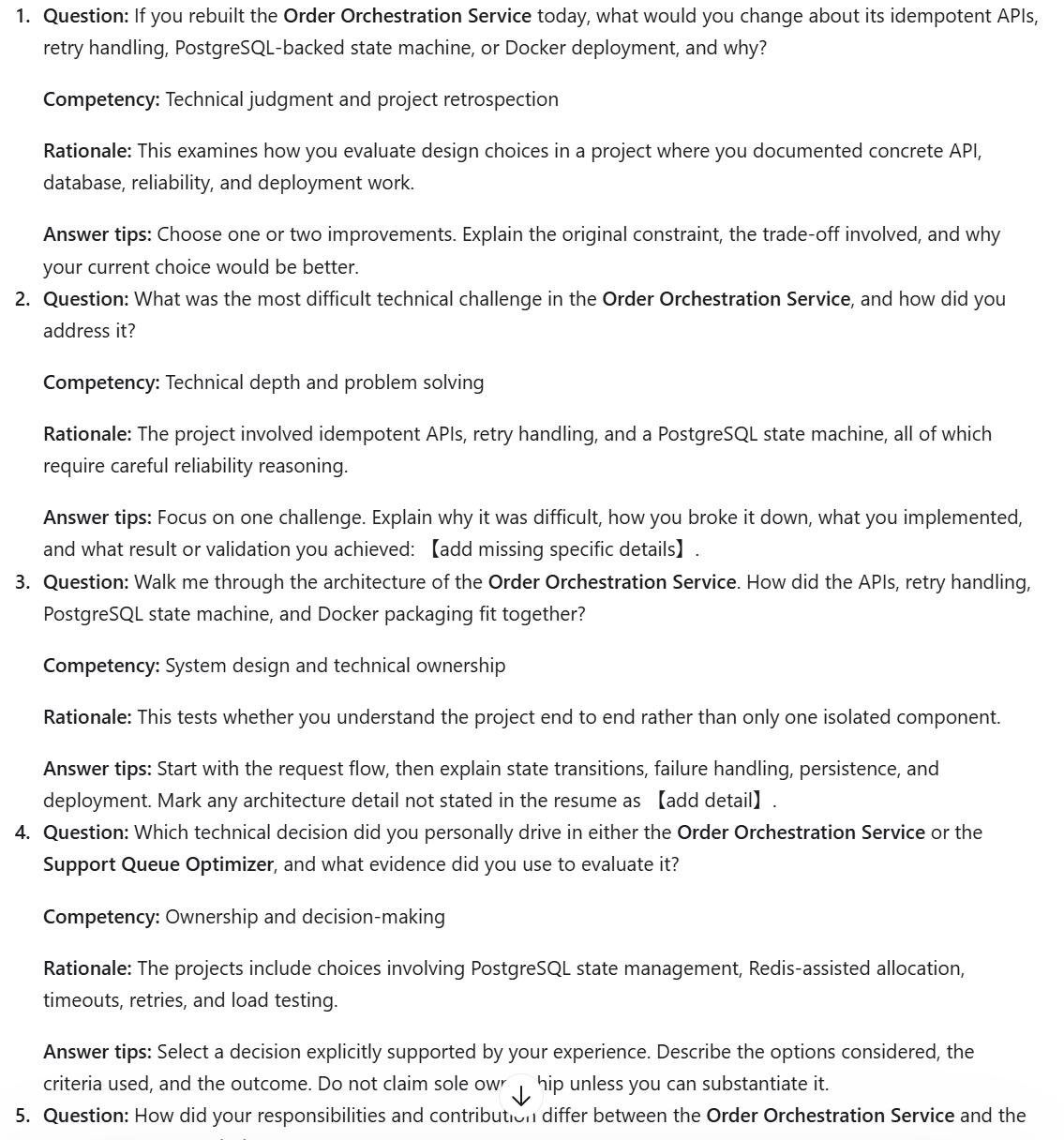
Each output demonstrates a concrete value: personalization, depth, question logic, and factual discipline.
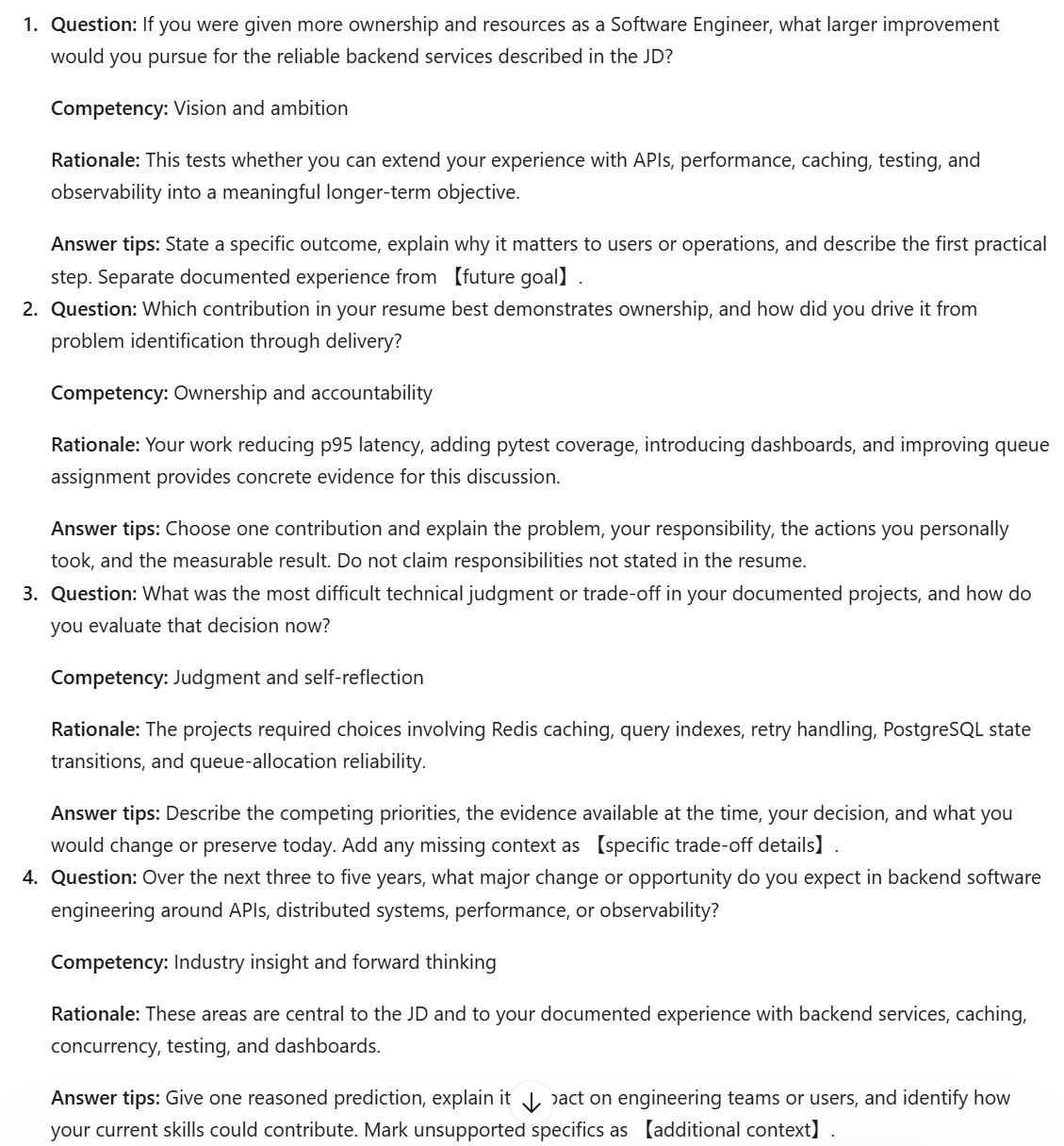
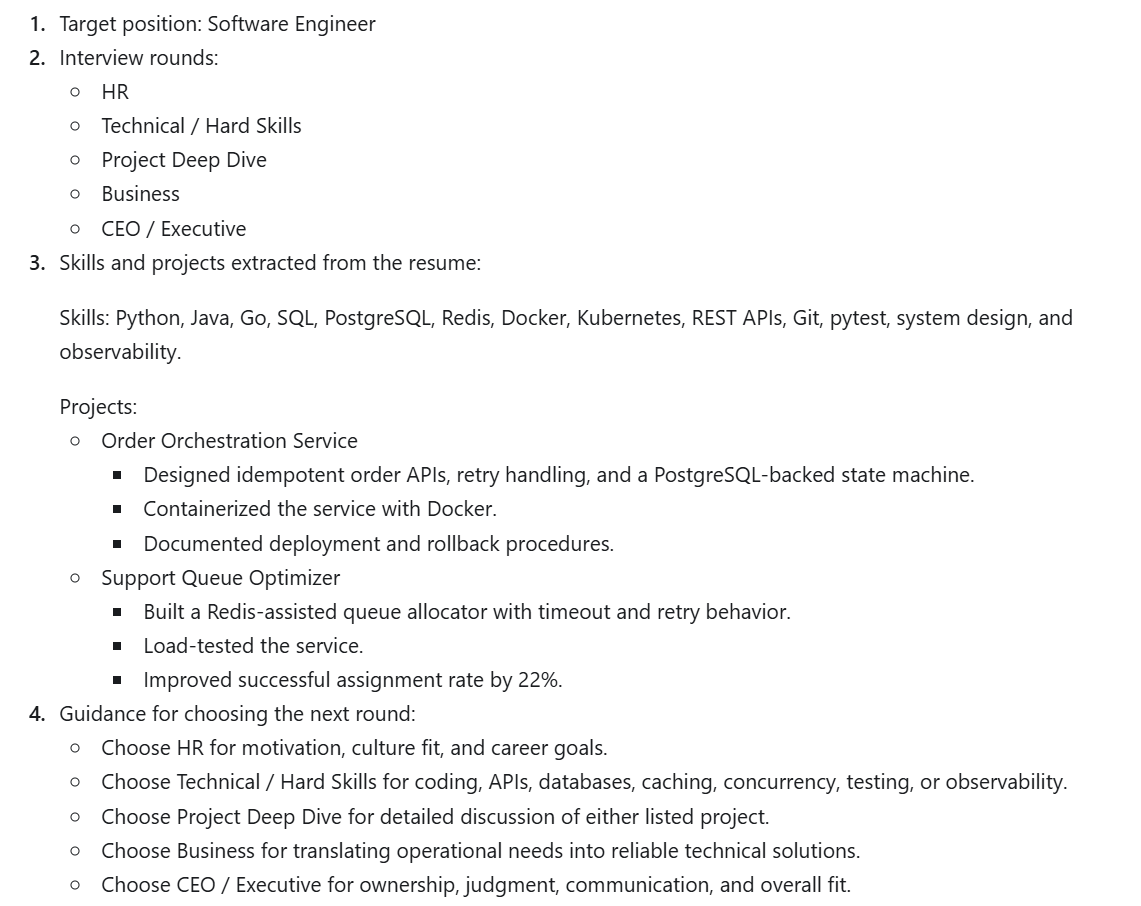
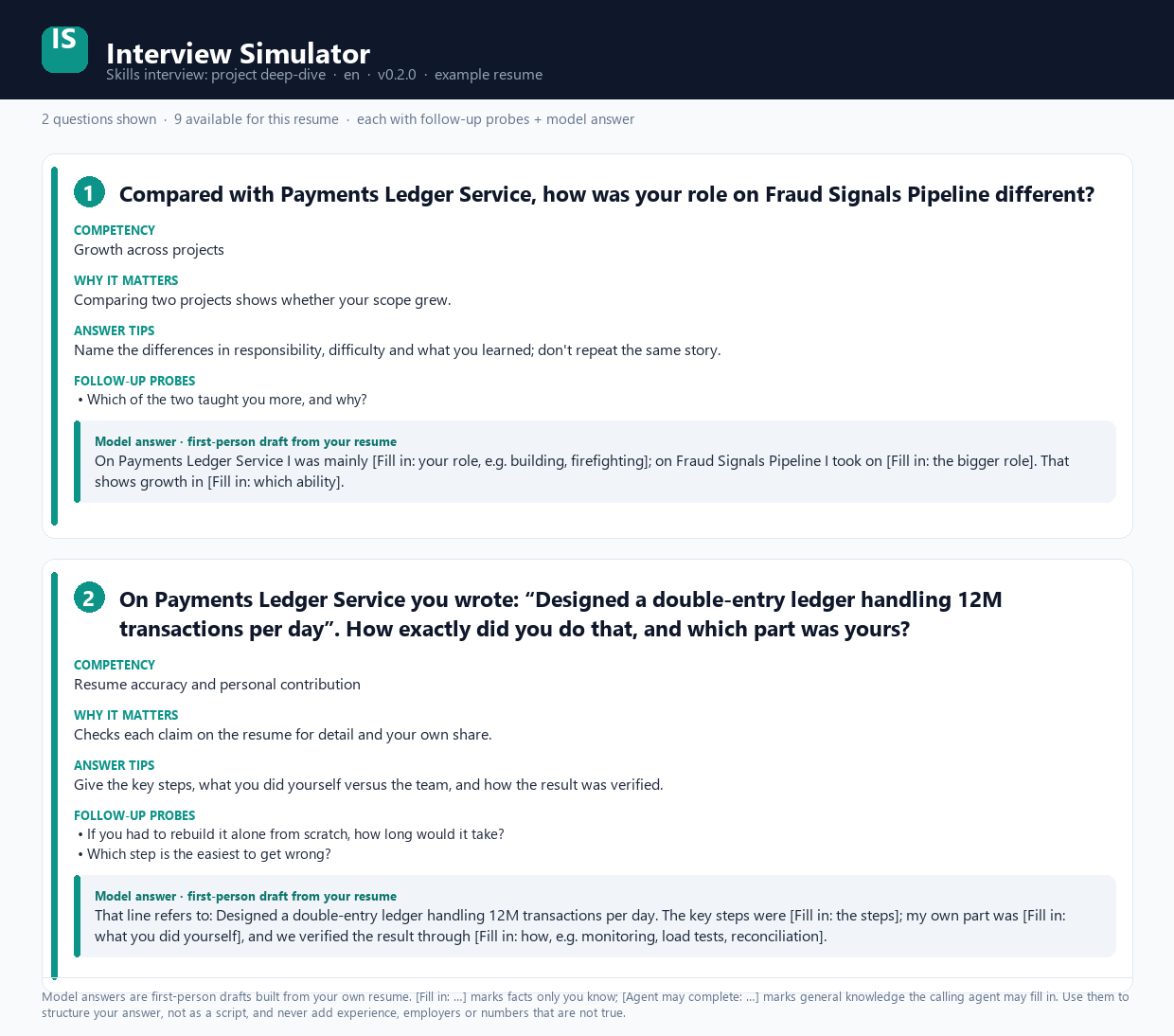
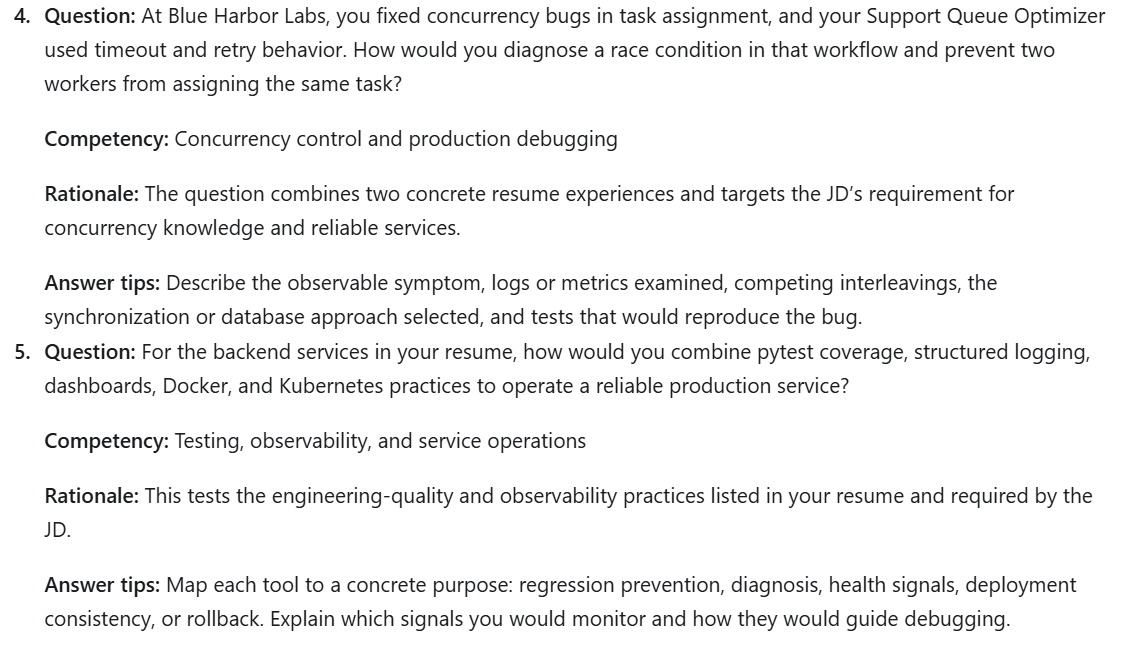
First output: builds a structured interview plan from the resume and target role, highlighting the experiences most likely to be challenged.Second output: drills into a selected project through ownership, technical choices, collaboration, and measurable results.Third output: continues the answer flow with deeper follow-up prompts and concrete guidance for the next response.
Before the real interview, rehearse until the story holds.
Final prep before interviews
For candidates who already have interview opportunities and need to prioritize the experiences worth rehearsing first.
Resume content audit
Turns broad claims like “owned a core project” or “improved efficiency” into concrete follow-up questions.
Role switches and career pivots
Reviews past experience through the target role’s lens and identifies what to emphasize or explain further.
Career center coaching
Generates differentiated questions for large student groups, suitable for courses, bootcamps, and self-practice.
Sweat through the follow-ups here, then show up steadier in the real interview.
It helps candidates identify likely follow-up points, close gaps around real experience, and build a more stable professional narrative before the interview.