- 01Recurrence is visible, but the CAPA trigger is unclear
- 02Causes, assumptions, and evidence are mixed together
- 03Actions lack consistent owners and acceptance criteria
- 04Effectiveness reviews drift until overdue items reach a meeting
Turn CAPA investigations into
traceable quality action
From recurring nonconformances to root-cause hypotheses, accountable actions, and effectiveness decisions, CAPA Investigator gives quality teams one disciplined operating structure.

From an ambiguous issue to verifiable action
The clearest improvement is not more text. It is a single decision structure connecting root cause, ownership, completion criteria, and verification.

Three jobs that move CAPA forward
Every capability shown here comes from the existing cases: decide when to initiate, separate root cause from evidence, connect actions to verification, and surface management priorities.
Evidence-aware 5-Why
Build a layered cause chain while clearly marking every missing input as “To be verified.”
- CAPA initiation decision
- Hypothesis and evidence separation
- Root-cause confirmation conditions
Action and verification design
Map containment, correction, corrective action, and prevention to owners, completion criteria, and verification.
- Four action categories
- SMART completion criteria
- Waiting and verification windows
Status and aging control
Summarize open, closed, and overdue CAPAs, then identify the item that needs management attention.
- Overdue-rate calculation
- Aging risk tiers
- Priority recommendations
Four steps to a stronger investigation
The workflow begins with observed facts and ends with human quality approval. The Skill structures the work; it does not replace compliance judgment.
State the facts
Provide what happened, frequency, scope, and the evidence already available.
Build the evidence chain
Separate observed facts, causal hypotheses, and materials that still need verification.
Connect the actions
Tie each measure to the root cause with an owner, due date, acceptance criteria, and verification method.
Verify and decide
Check records, tests, and recurrence, then route the conclusion to the CAPA Owner and QA.
Move quality work to its next decision
Built for everyday situations where teams need a shared view of evidence gaps, accountable actions, or management risk.
One structure from investigation to review
It does not make regulatory decisions for you. It makes the relationship between the issue, evidence, actions, and risk easier to inspect.
Real outputs across the CAPA lifecycle
Each example uses the same Skill for a different decision: establish causes, design actions, or set management priority. Select a screenshot to inspect the full result.

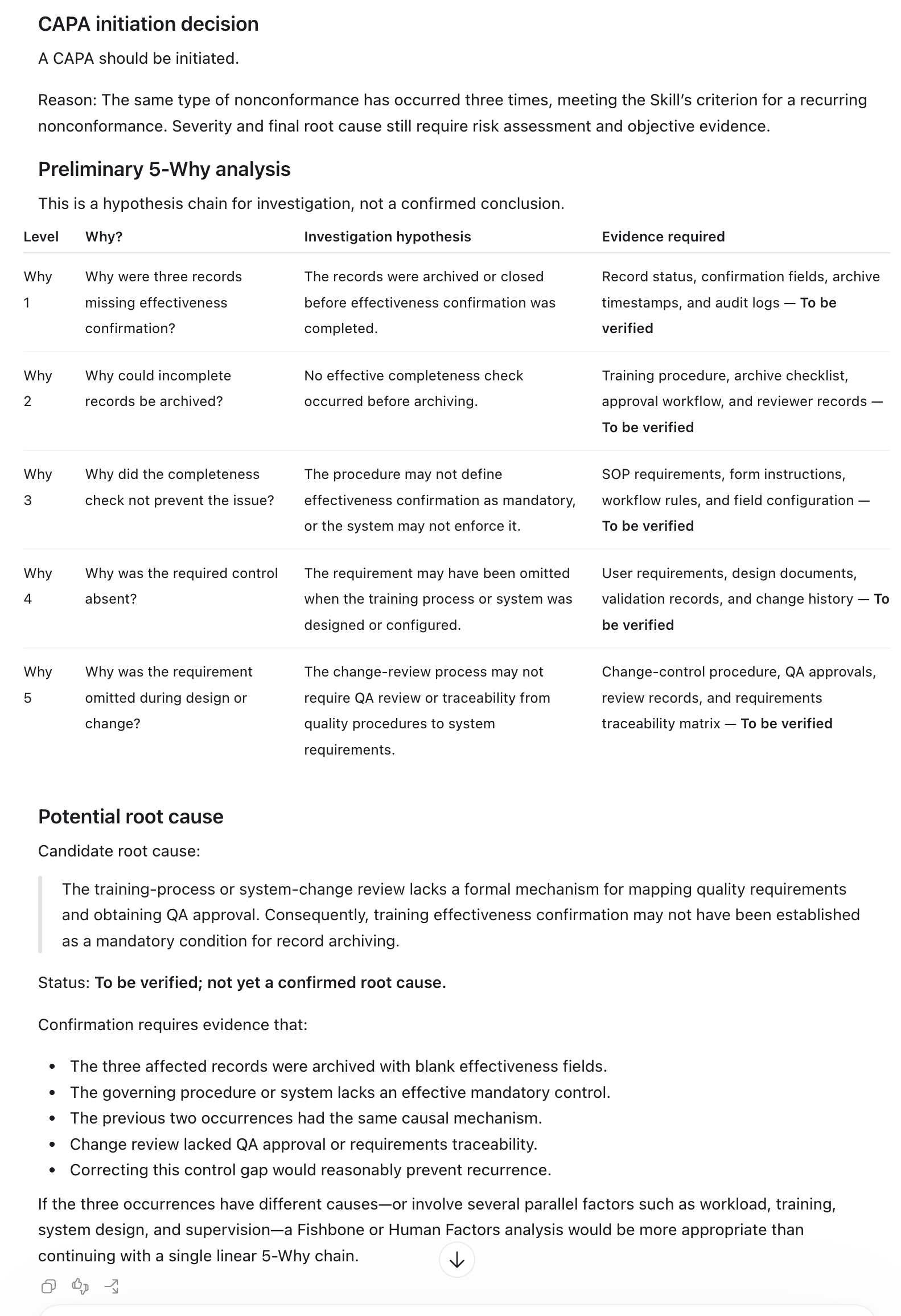
5-Why for recurring training gaps
Initiates CAPA after three recurrences and builds a process-control hypothesis chain without inventing evidence.

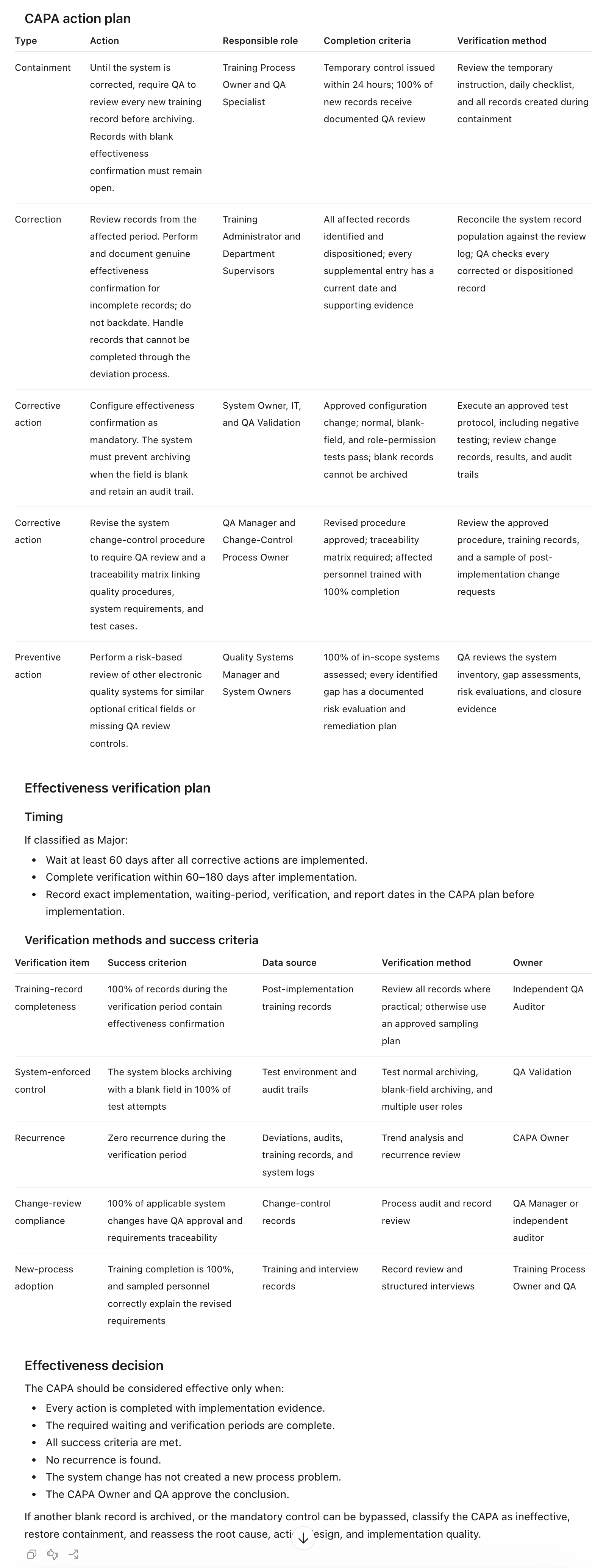
CAPA plan for an electronic training system
Turns a system control gap and missing QA review into five accountable actions and measurable effectiveness criteria.

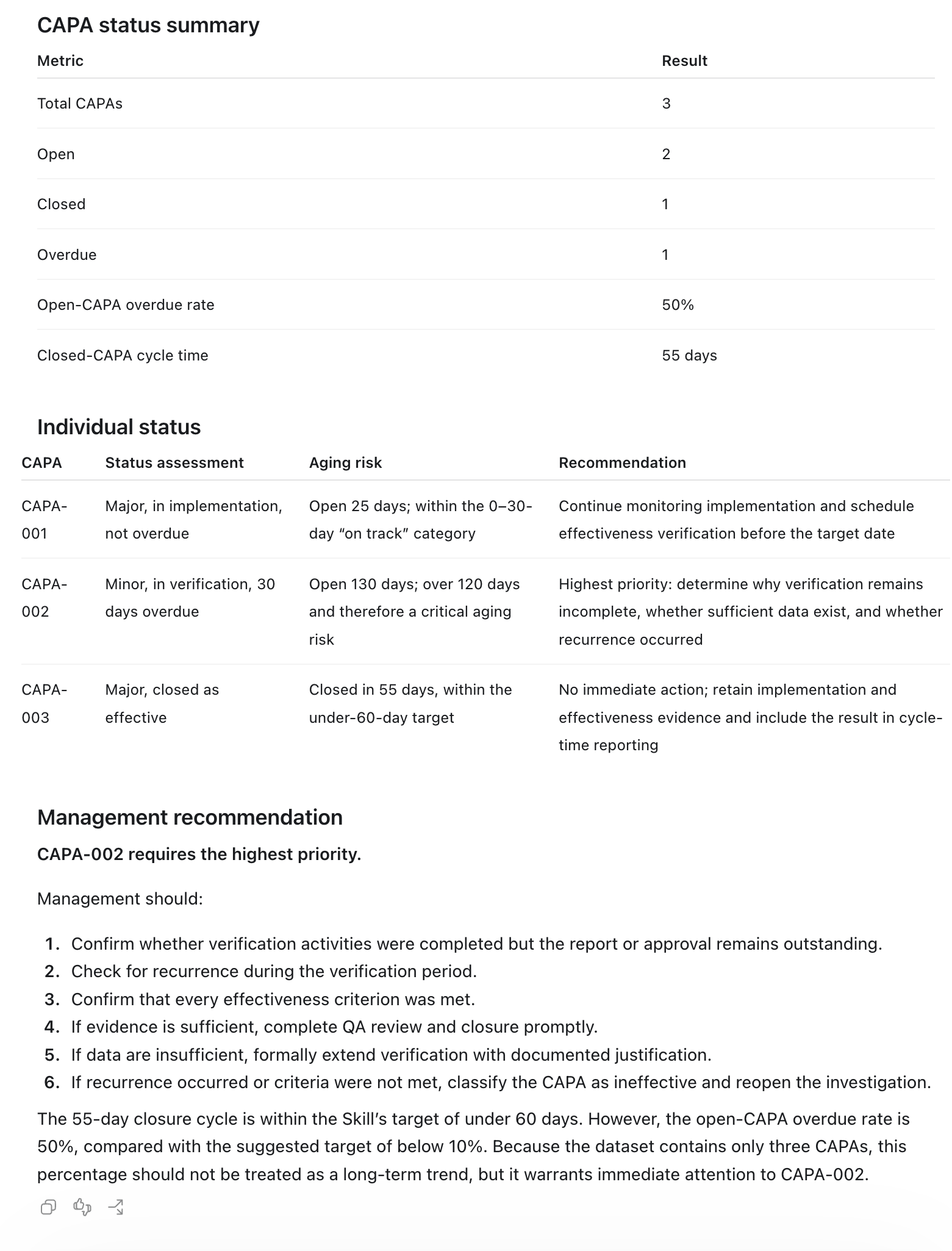
Priority review across three CAPAs
Calculates a 50% open-item overdue rate and elevates the 130-day item for immediate review.
Structured by design. Human by authority.
The output advances investigation and quality review. It does not automatically certify a root cause, declare effectiveness, or close a CAPA.
Missing inputs remain explicitly marked for verification; hypotheses are not presented as facts.
Causes, actions, and effectiveness criteria remain connected and reviewable.
The CAPA Owner and QA retain authority for effectiveness and closure decisions.
English and Chinese examples use their corresponding prompts and runtime results.
Designed for everyday quality collaboration
Give investigators, process owners, and management one shared structure for facts, actions, and decisions.
QA & Quality Systems
Structure investigations, review evidence, and approve effectiveness conclusions.
CAPA Owners
Coordinate causes, actions, deadlines, and cross-functional delivery.
Process & System Owners
Implement system or procedure changes and provide verification evidence.
Management Review Teams
Identify overdue, aging, and escalation priorities across the CAPA portfolio.
Start the next CAPA with a clear problem statement
Provide the issue, frequency, scope, and available evidence. CAPA Investigator helps turn them into a reviewable cause chain, action plan, or status summary.
View the workflow →