01 Hero
Identify Medical Device Risks,
Try This Skill
Device Risk Manager
Built around ISO 14971, it connects risk-management planning, hazard analysis, risk evaluation, risk controls, residual risk, and post-production monitoring into a traceable workflow, with local risk-matrix and FMEA tools to support analysis.
A risk-management assistant for medical device R&D, quality, and regulatory teams
Provide the device's intended use, known hazards, existing controls, and approved evaluation criteria. The Skill helps organize risk entries, calculate illustrative ratings, connect controls with verification requirements, and list evidence that still needs to be supplied.
It supports analysis, calculation, drafting, and traceability. Risk acceptance, confirmation of control effectiveness, and approval of regulated records remain the responsibility of qualified owners.
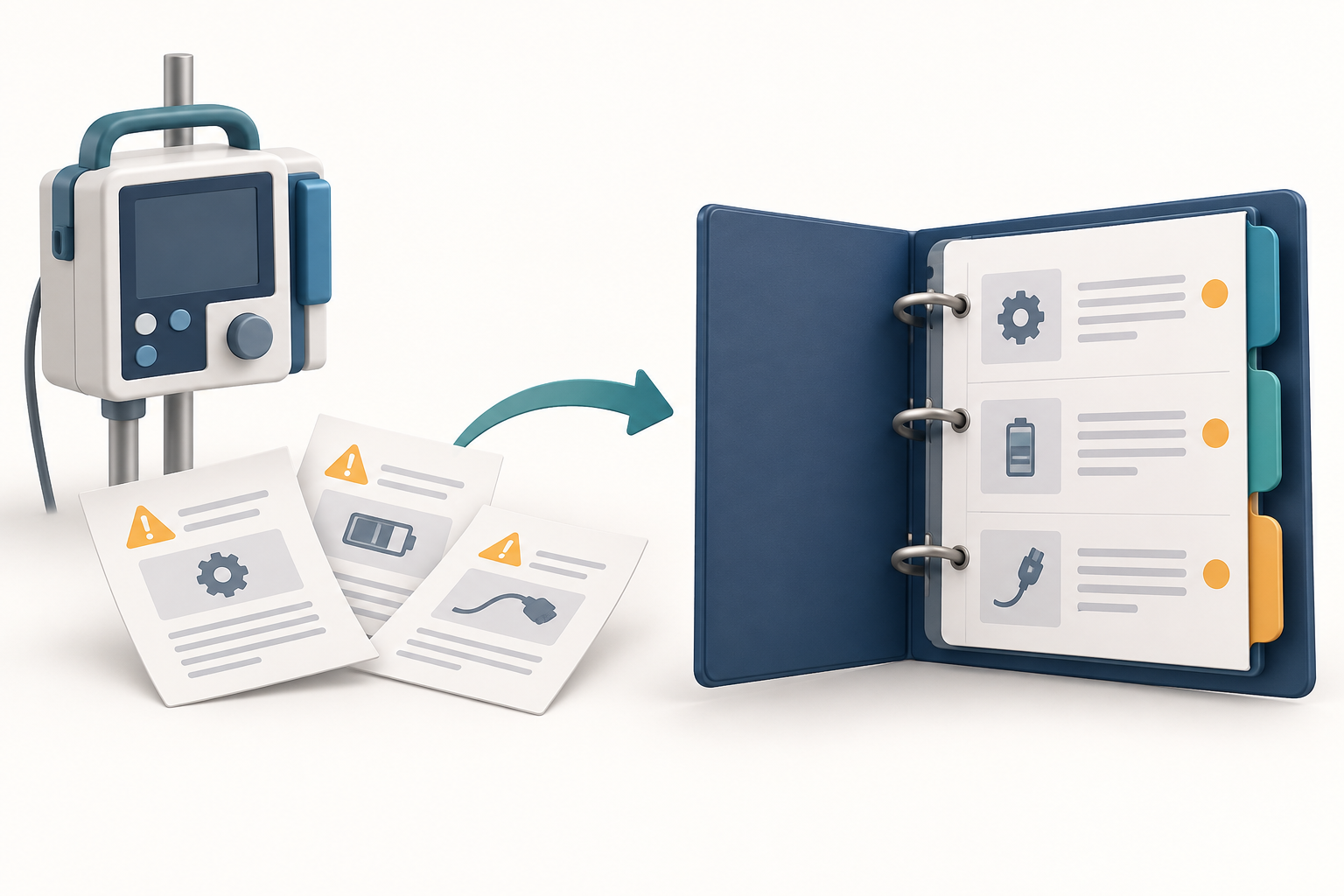
02 Before and After
| Work area | Before | After |
|---|---|---|
| Hazard analysis | Intended use, failures, and harm descriptions are scattered, so the links must be completed one by one. | Organize review entries by hazard, sequence of events, hazardous situation, harm, and estimation rationale. |
| Calculation and prioritization | Existing ratings still need calculation item by item, and it is easy to focus only on the total RPN. | Local tools return levels and RPN; the FMEA analyzer separately lists high-severity items. |
| Controls and updates | Controls, test records, and complaint information are maintained separately and need to be found again during review. | Use consistent identifiers to organize controls, verification evidence, residual risk, and updates. |
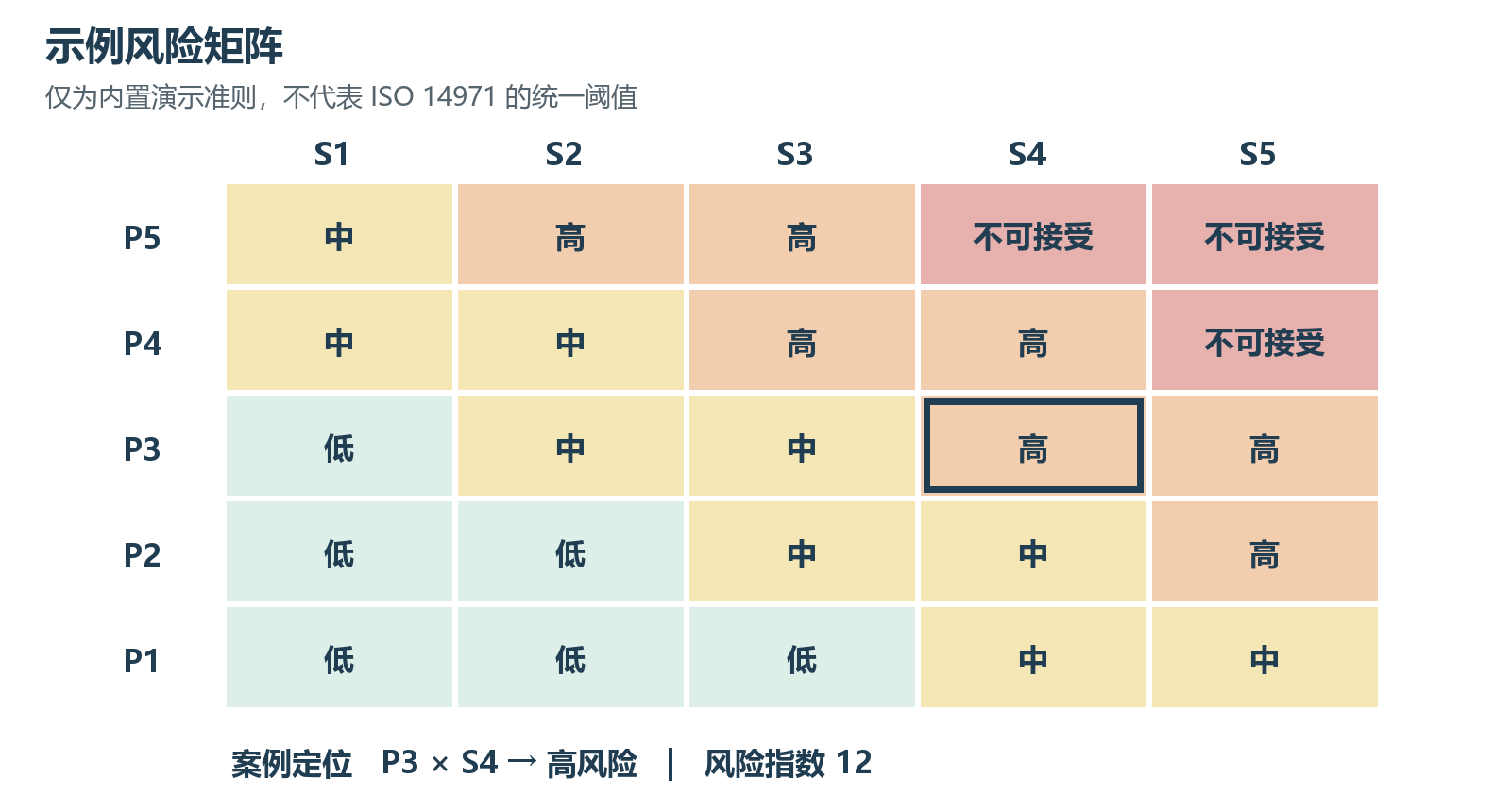
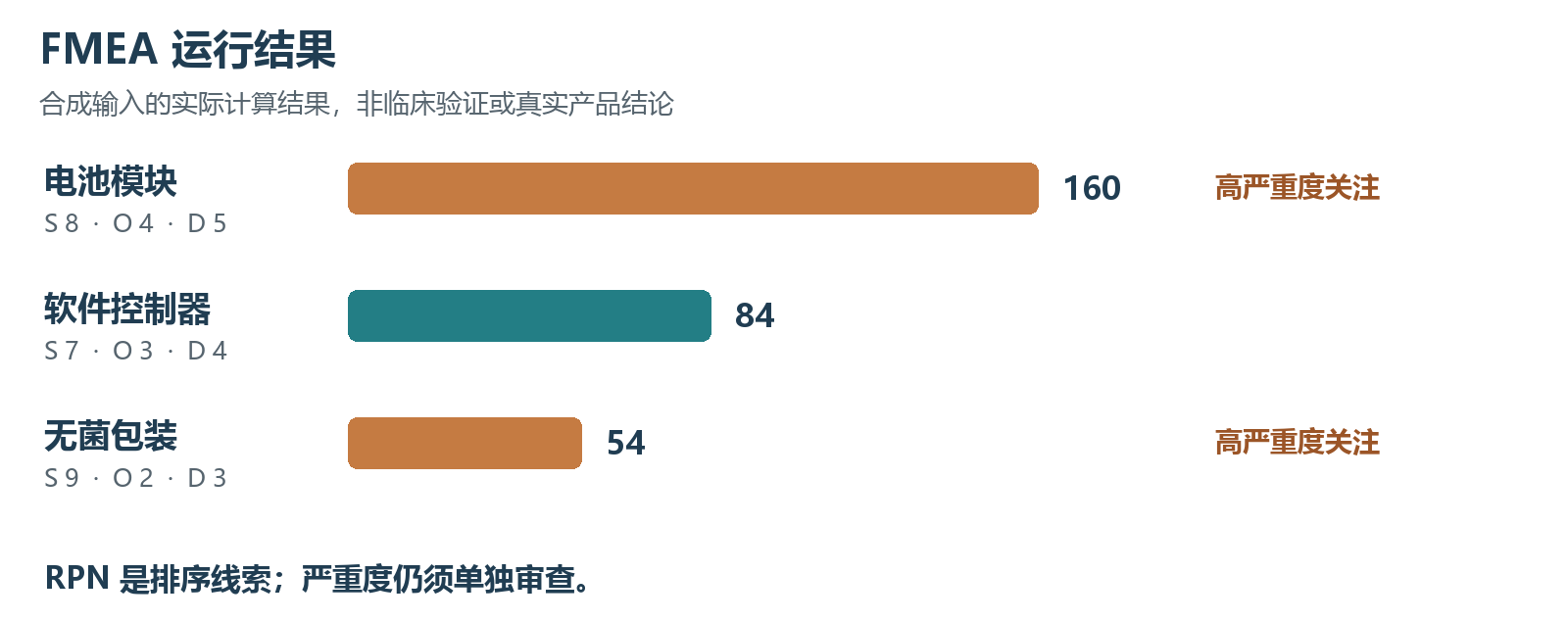
Illustrative result: P3 and S4 correspond to High risk in the built-in matrix. Three FMEA inputs produce RPN values of 160, 84, and 54; two are marked for high-severity attention. See Section 06 for the full cases.
03 Where It Fits Best
Before a design review Turn a failure description into risk analysis
“The device may stop” does not yet explain the risk. The team still needs to state what event causes it, who is exposed to the hazard and in what situation, what harm may result, and where the estimate comes from. The Skill provides an analysis sequence and record structure to keep these questions in one reviewable package.
During quality review See the gap between a control and its evidence
Writing “add an alarm” does not make a control effective. Review still needs to find the design requirement, implementation record, test method, pass criteria, and actual result. The Skill can help organize traceability so missing evidence and responsibilities awaiting confirmation are easier to see.
After a design change or in post-production Find the entries that need review again
Complaints, service records, or design changes may alter the original risk judgement. Provide the new information with the existing file to the Skill to organize affected entries, follow-up investigation questions, and file-update actions. The team still needs to collect and provide the materials.
04 Let Each Decision Carry Into the Next Review
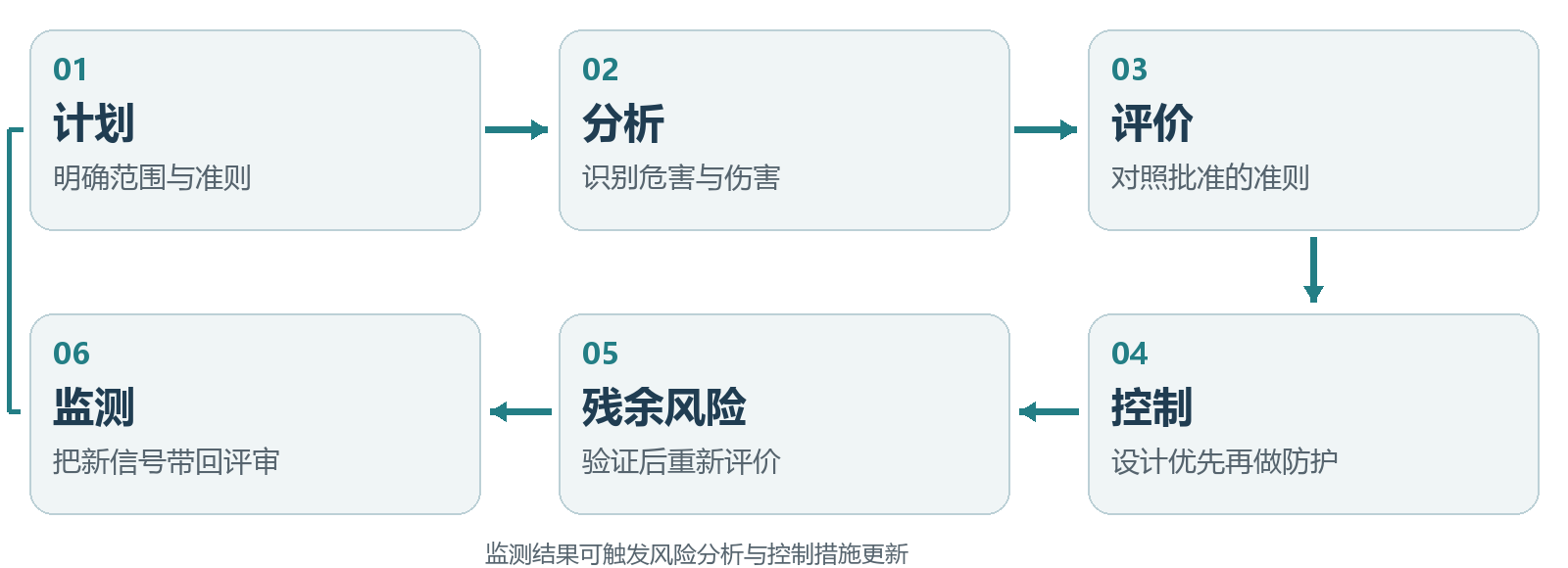
Risk management needs hazards, controls, verification, and subsequent signals to correspond with one another. Device Risk Manager uses one workflow to organize these steps, so evidence left by one analysis can continue into the next review.
05 From Input Materials to Reviewable Outputs
Define the device and criteria first, then begin the analysis. The Skill organizes work around the lifecycle; local scripts handle matrix lookup, RPN calculation, and FMEA summaries, while the team must review analytical suggestions against project evidence.
| What you provide | What can be organized |
|---|---|
| Device intended use, patients and users, environment, lifecycle stage, and reasonably foreseeable misuse | Risk-management scope, analysis tasks, and a draft hazard register |
| Hazard sources, sequences of events, harms, probability and severity rationales, and existing controls | Hazard-analysis or FMEA entries, initial evaluation, and evidence gaps |
| Manufacturer-approved criteria, applicable markets, review roles, and approval authority | Control priorities, verification requirements, residual-risk review, and an ownership handoff list |
Consider Risk Controls in This Order
- 1 Inherent safety by design: First eliminate the hazard, or reduce risk through safer mechanisms, design constraints, and fail-safe design.
- 2 Protective measures: Assess safeguards such as interlocks, alarms, limits, or automatic stop functions, and check whether they introduce new hazards.
- 3 Information for safety: After considering higher-order options, determine the role of warnings, instructions for use, and training.
Once a control is implemented, its implementation and effectiveness still need verification, followed by re-evaluation of individual and overall residual risk. In EU MDR scenarios, reduce risk as far as possible under AFAP, without treating economic cost as a reason to accept risk, while considering the benefit-risk ratio.
06 Use Cases and Outputs
Case One Hazard Analysis and Matrix Positioning for an Infusion Device
Scenario: An infusion device used by healthcare professionals in a hospital may allow unintended free flow when its door is opened for tubing replacement. P is the probability rating for occurrence of harm and S is the severity rating for harm. P3 and S4 are teaching assumptions only, not approved clinical estimates.
| Field | Review entry H 001 |
|---|---|
| Event chain and harm | Clamp not fully engaged → free flow after the pump door is opened → the patient receives more infusion than expected → serious harm related to medication overdose may occur. Specific harm depends on the drug, dose, and patient. |
| Control candidates | At the design layer, first assess an anti-free-flow mechanism; at the protective layer, assess independent flow monitoring and stop functions; at the information-for-safety layer, add tubing-change procedure and training. |
| Verification and new risks | R&D proposes anti-free-flow and fault-state tests; clinical confirms the harm scenario; quality checks the evidence. Also review new risks, such as interruption of therapy caused by an unintended stop. |
| Current conclusion | High risk; risk control needs to proceed. Verification records and effectiveness evidence have not been supplied, so residual risk remains pending evaluation. |
How to use the result: Link H 001 to control requirements, verification protocols, and actual report numbers. Matrix levels come from lookup and cannot be assigned solely from the P×S product.
Case Two Priority Attention Items in an FMEA Review
Three synthetic failure records—premature battery depletion, firmware crash, and sterile-packaging seal breach—are entered into the local FMEA analyzer. S, O, and D represent severity, occurrence, and detection. This case uses the tool's illustrative 1-to-10 scale.
| Input item | S | O | D | RPN | Item attention level |
|---|---|---|---|---|---|
| Premature battery depletion | 8 | 4 | 5 | 160 | CRITICAL |
| Firmware crash | 7 | 3 | 4 | 84 | MEDIUM |
| Packaging seal breach | 9 | 2 | 3 | 54 | CRITICAL |
A Lower-Scoring Item May Still Need Priority Review
The packaging seal breach has an RPN of 54, but its severity is 9, so the analyzer marks it CRITICAL. This label comes from the high-severity rule and must not be conflated with the separate calculator's RPN priority. Review should consider both harm severity and RPN rather than filtering risks by total score alone.
After the Result Assign Attention Items to the Right Owners
Assign the battery item to the hardware and systems team to review power-loss and alarm design; assign the software item to the software team to review failure behavior; assign the packaging item to manufacturing and quality teams to inspect process and verification records. The Skill can draft an action list, but implementation results, effectiveness, and acceptance conclusions still require actual evidence.
Illustrative summary: 3 records; average RPN 99.3; median 84; 2 high-severity items. High-severity statistics and RPN buckets are separate dimensions and cannot be added together as a total-risk count.
07 Core Advantages
Give Analysis a Shared Structure
Put intended use, hazards, sequences of events, and harms into one continuous analysis path to support cross-functional discussion. The reference material also provides organizational methods for FMEA, FTA, HAZOP, and use-error analysis.
Give Numbers and Judgement Their Own Basis
Local tools handle repeated calculations, allowing the team to focus on the rationale for ratings, high-severity items, and evidence gaps. Numbers are review inputs only and cannot replace device-specific risk-acceptability criteria.
Trace Controls Through to Verification
Extend from control options to design requirements, verification methods, new-hazard checks, and residual risk, reducing the disconnect of “a control was written down, but no one explained how it would be proven effective.”
08 Why It Belongs in the Workflow
The risk file changes continuously with device design and use experience. With consistent entry identifiers and evidence relationships, a new complaint analysis or design review can build on existing work while making the basis for judgement, missing evidence, and ownership visible.
Scope boundary: The built-in matrix, probability bands, and RPN thresholds are illustrative and must be replaced or approved by a qualified manufacturer owner before formal use. The local calculation scripts do not provide a direct import option for company criteria; they require configuration or modification and verification. The tool does not certify ISO 14971 or EU MDR compliance, automatically collect post-production data, or approve a risk file.
09 Start With a Clear Set of Risk Materials
Device Risk Manager
View the original author's Skill source and description
Provide the device's intended use, hazard list, existing controls, and approved probability and severity definitions. Begin with a traceable analysis draft, an evidence-gap list, and review items for the responsible owners.
A Request You Can Use Directly
Please use Device Risk Manager to review this set of infusion-device risk materials. Under our approved criteria, organize hazards, sequences of events, hazardous situations, and harms; calculate initial risk; propose control candidates in the order of design, protection, and information for safety; check for new hazards; and list verification evidence and required owners. Mark content without evidence as pending. Do not accept residual risk on our behalf.