Original plan: Reply to work messages only at lunch and before finishing work. The rule does not yet distinguish routine updates from confirmations that keep colleagues moving.
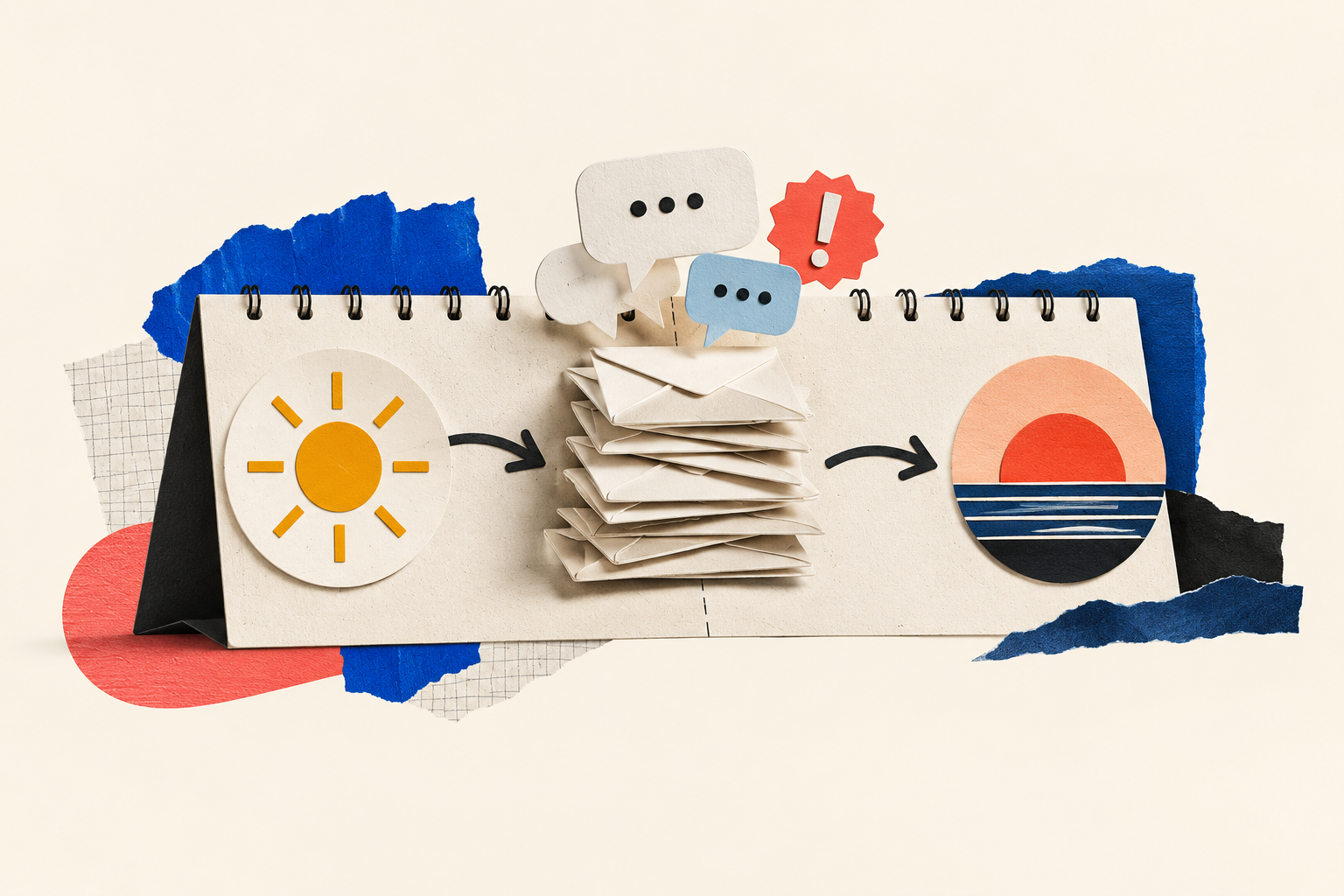
Original reply plan · Concept illustration
brain2-roundtable brings four distinct roles to your question: proposer, analogist, skeptic, and pragmatist. Follow the reasoning, see what gets challenged, and leave with an action card linked to your own notes.
Original plan: Reply to work messages only at lunch and before finishing work. The rule does not yet distinguish routine updates from confirmations that keep colleagues moving.
Original reply plan · Concept illustration
After the roundtable: Check ordinary messages after work blocks. Give urgent requests a separate route and ask senders to state what is blocked and when they need a reply.
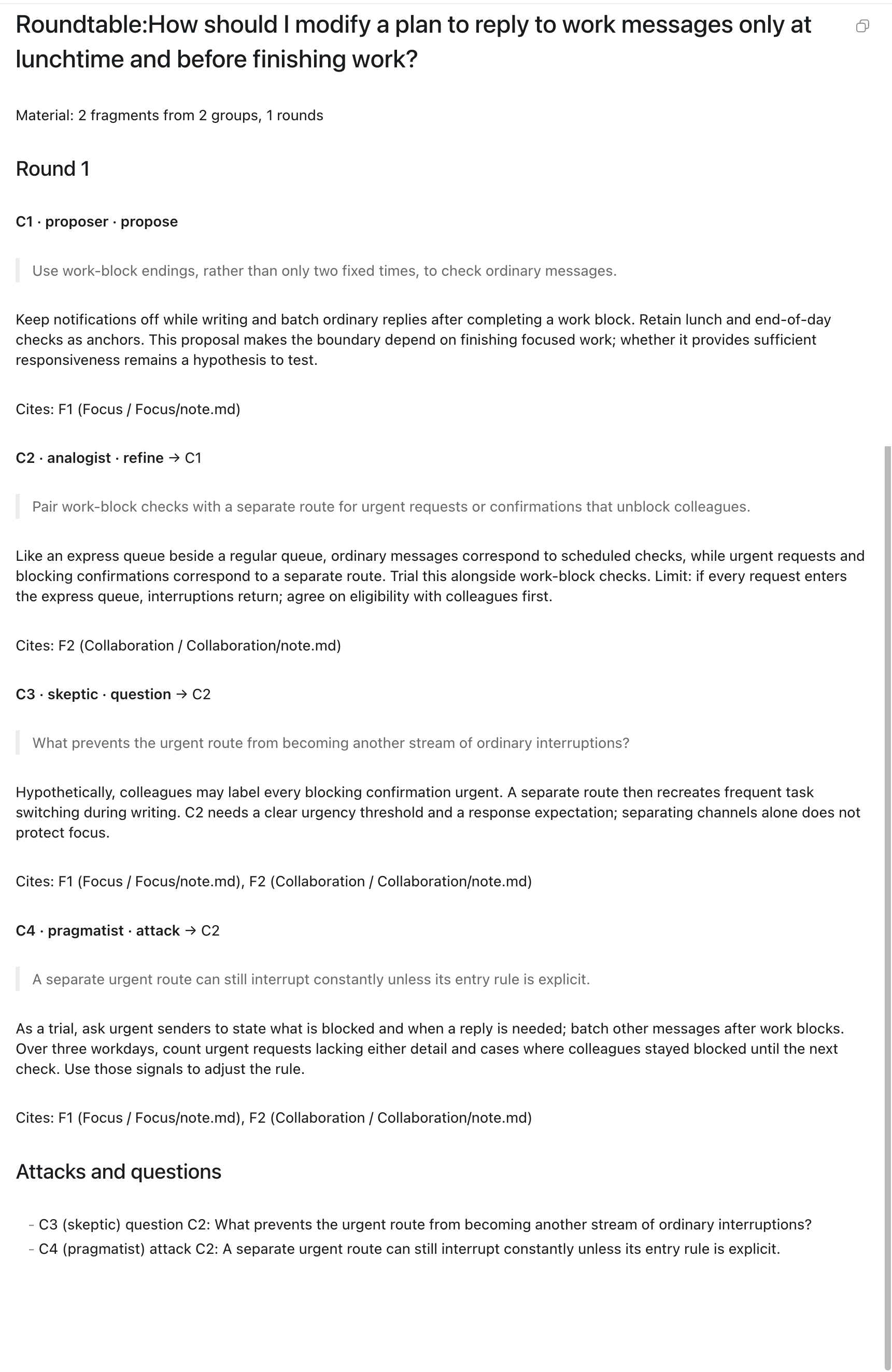
This is a more explicit proposal to try, not a measured reduction in interruptions.
Each example below uses two groups of notes, one round with four individual statements, and a single action card.
Borrow an idea from another group of notes while making the analogy and its limits clear.
Put a specific objection on the board so later contributions can address it.
Link cards to claims and fragments, with source quotations copied directly by the script.
Bring the discussion into a specific idea, a reason to try it, a next action, and risks.
Choose a specific question and group your notes by topic.
Keep source references and fragment IDs, then assign material to each role.
Each role works independently. Statements enter the board only after passing the rule checks.
Connect the idea to existing claims and sources from different groups. Address the strongest challenge in the risks.
Export the card and full transcript to revisit how the proposal changed.
How can I tidy my desk in five minutes before finishing work?
Kitchen and Games notes lead to a reset designed for the next work session. The objection is practical: deciding where items belong could use up the five minutes.
The resulting card starts with items that already have homes and one small section. That scope is a trial; temporarily grouping other items can simply move the clutter.
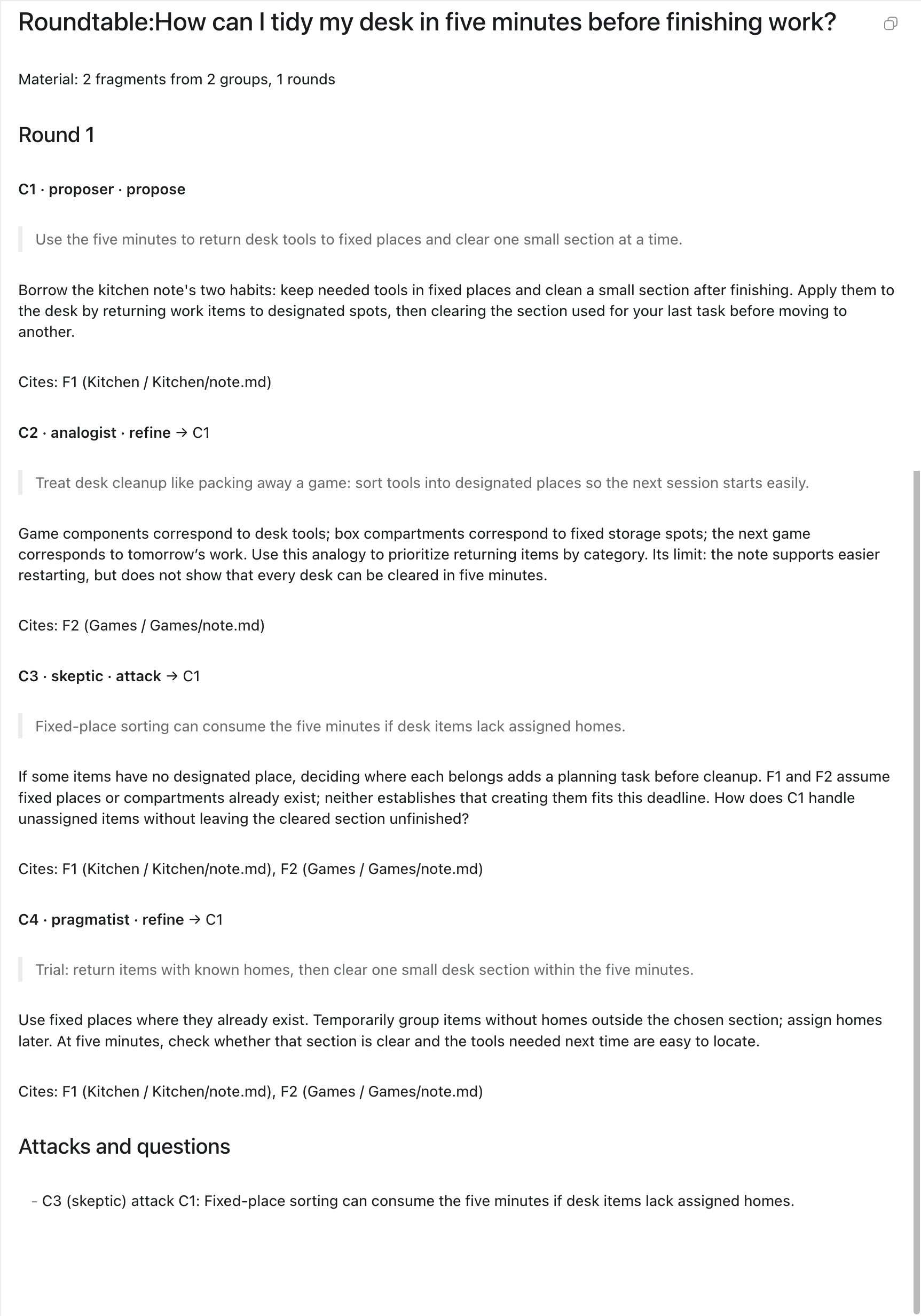
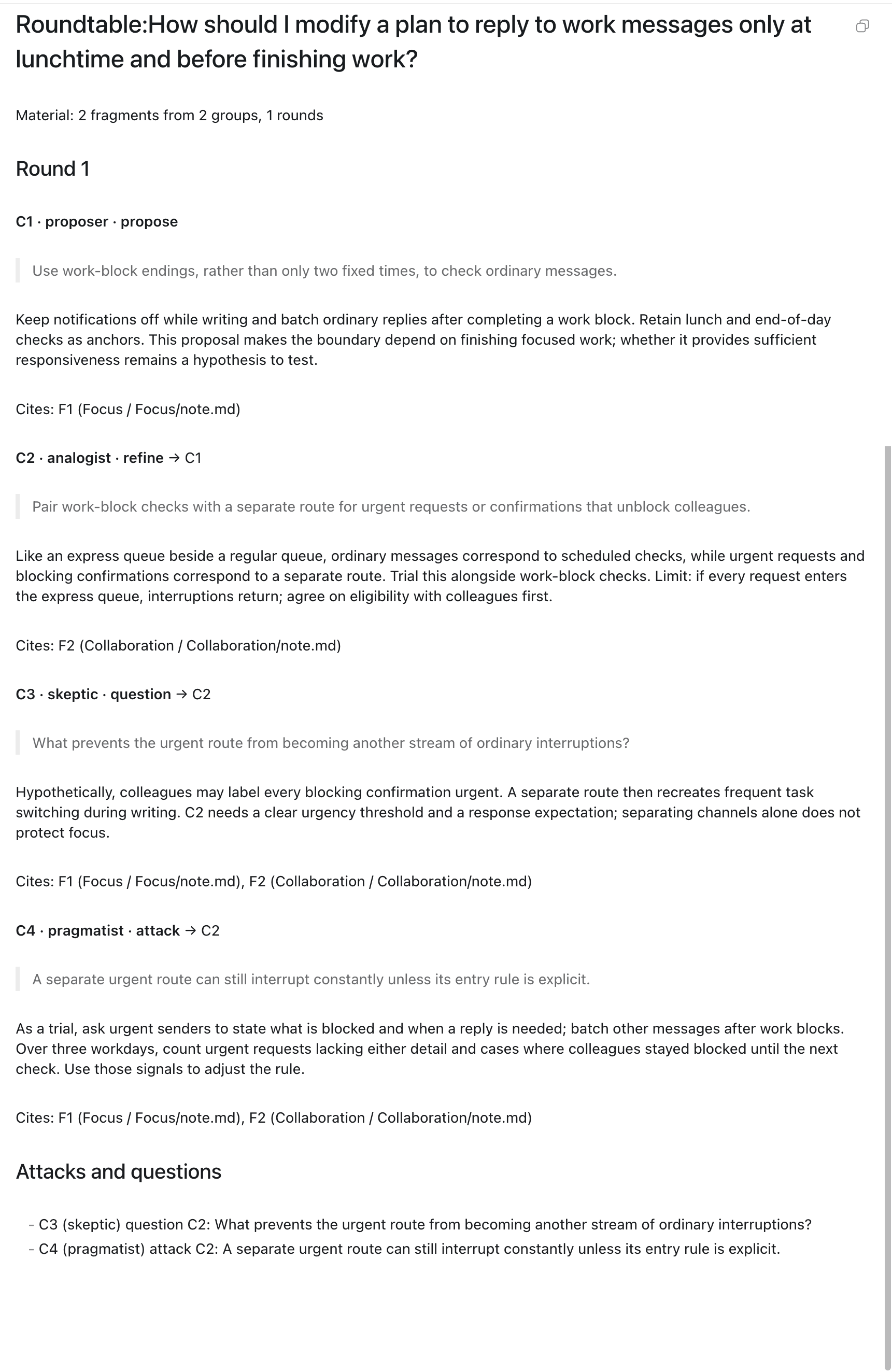
How should I modify a plan to reply only at lunch and before finishing work?
An urgent route sounds useful, but it can become another stream of interruptions. The discussion adds an explicit request format: what is blocked and when a reply is needed.
The card proposes a three-workday trial of work-block checks and clearer urgent requests. Eligibility and response expectations still need agreement; fewer interruptions are not yet established.
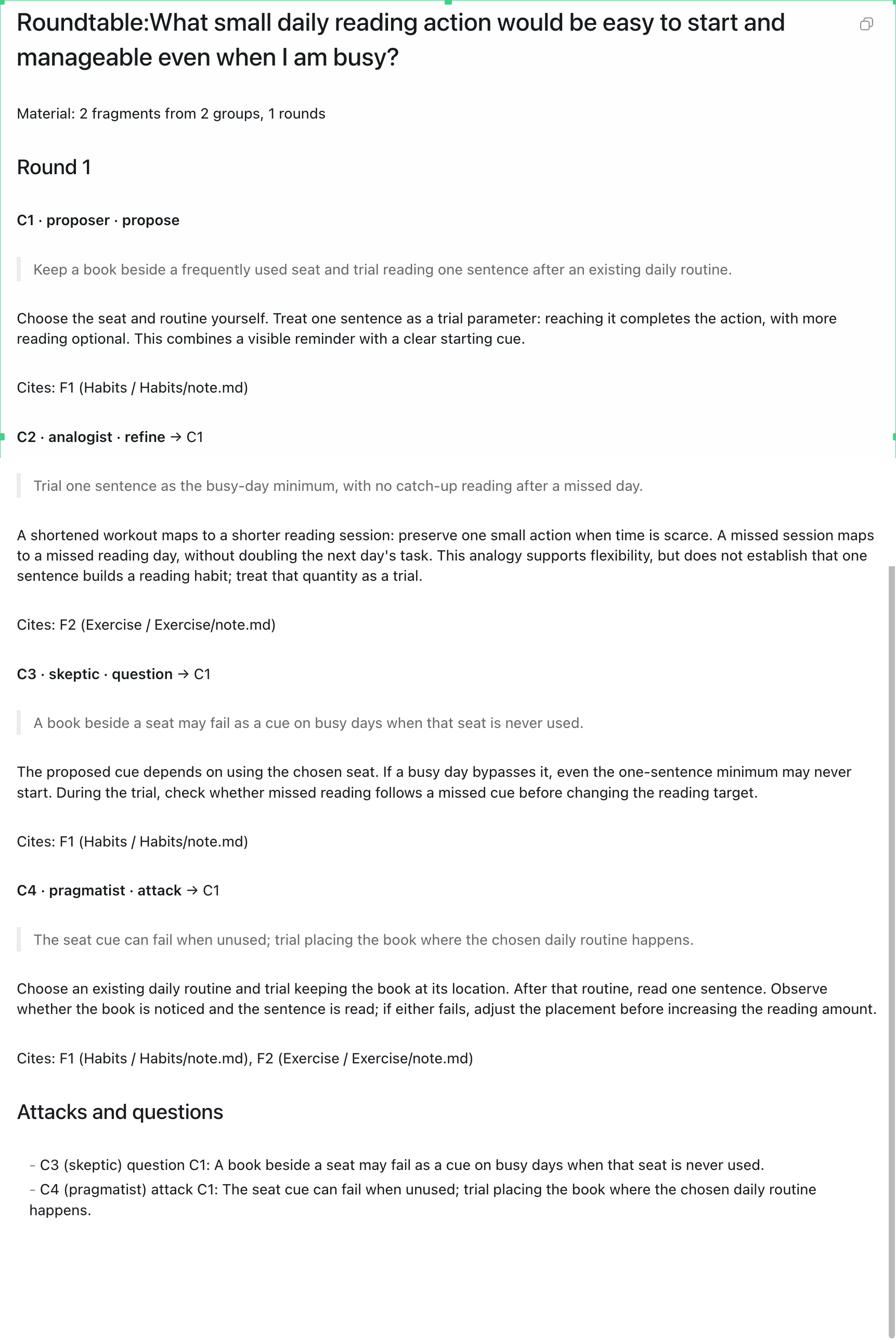
What small daily reading action would be easy to start, even when I am busy?
Habits and Exercise notes suggest a small reading action without catch-up debt. The challenge is the cue: a book beside a seat does little on days when that seat goes unused.
The card asks you to choose an existing routine and keep the book where it happens. One sentence is a trial parameter; notice whether the routine occurs, the book is seen, and reading starts.
Scripts check role order, assigned sources, and claim references. A statement becomes an official claim only after acceptance.
Cards retain fragment IDs and source references. The transcript shows which claims were refined or challenged.
Each card addresses objections and treats trial parameters as proposals. You still need to assess whether the action works in your setting.
For people who have notes and a concrete plan to improve: professionals balancing focus with collaboration, people refining everyday routines, and learners looking for a manageable way to start reading.
Download brain2-roundtable from Finch and give the installation package or extracted folder to your AI assistant to install. Bring a question and two groups of notes to begin a roundtable.
Download from Finch ↗