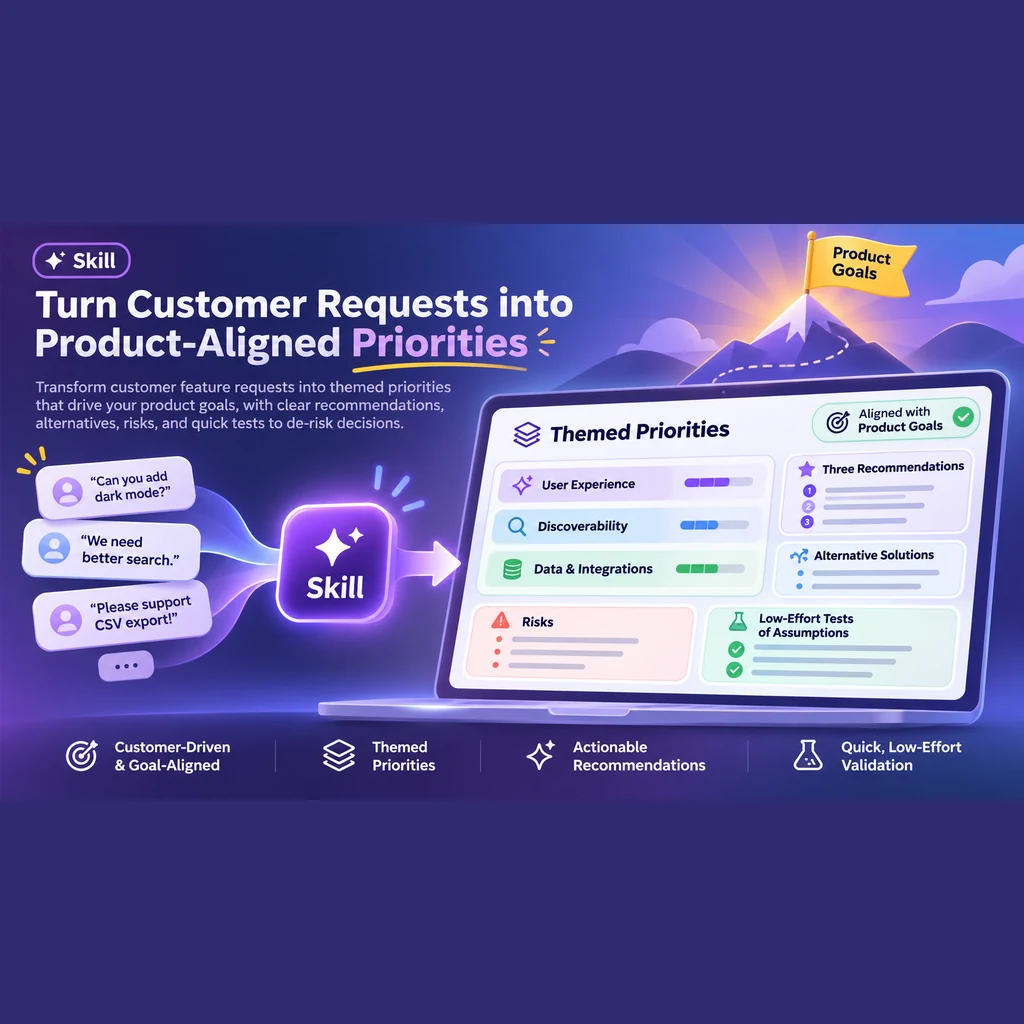
Turn a pile of requests into three reasoned priorities, with the alternatives and uncertainties still attached.
Dispatch 01 / Saved result / Fictional caseMonday delivery may make Wednesday adjustments too late for the current week's chilled kits.
Verbatim from the saved Tidewell Desk run. The request was “flex headcount”; the useful result was a feasibility question that must be answered before building it.
The decision packet
Three recommendations. Reasons you can inspect.
01
Validate a flex-headcount service
Test attendance and waste reduction with a feasible ordering cutoff before committing to automatic changes.
02
Validate dietary compatibility
Find out whether people can choose a suitable meal. Review labels before building a broad filtering system.
03
Validate a manager spend summary
Use a manual report to discover which decision managers need to make before creating a dashboard.
Faithful abridgement of one generated analysis. These are proposed validation activities; no customer pilots were executed.
You provide
Goals and requests
The product objective and the decision you need to make.
A backlog, customer notes or supplied request files.
Known reach, effort, constraints and risk evidence.
Importance and satisfaction ratings if you want opportunity scores.
You receive
A reviewable analysis
Themes organized around customer problems.
Strategic alignment for each theme.
Three priorities assessed for impact, effort and risk.
Alternatives, high-risk assumptions and minimal tests for each recommendation.
Who uses it
For the backlog review before a build commitment.
Works well when
A product manager, founder or discovery team has a stated goal and requests that need synthesis. The analysis makes an explicit first-pass case for what to investigate and why.
Needs other work when
You need verified market data, engineering estimates, a compliance determination or statistically reliable customer findings. This instruction workflow does not supply those inputs.
Use and dependencies
Read the Skill, then bring the evidence.
Extract the official source ZIP and load its folder through a Skill-aware assistant, or ask a file-capable assistant to read SKILL.md and follow it. Codex and Claude Code can read such instructions; only a Codex worker execution was checked here, and neither native installation flow was tested.
A capable language model is required, and model access may incur charges. This workflow requires no additional service API key or web research. It is an instruction package, not an autonomous request-tracking service.
The source includes the Opportunity Score formula. Its reference to the separate prioritization-frameworks Skill points to additional templates that are not bundled; external further-reading courses are not included access entitlements.
Bounded evidence
Coverage checked. Business results unmeasured.
The saved run maps all eight supplied backlog requests, produces exactly three recommendations and passes seven executable content-structure checks. That verifies an inspectable sample, not the truth of a recommendation or its effect on churn, margin or revenue.
No numeric opportunity score was fabricated: the fixture contains neither importance nor satisfaction ratings. Unknown reach and engineering effort stay unknown.
AI-generated promotional artwork. The source package includes this 1024 × 1024 WebP; it is not an application screenshot or evidence of business outcomes.